Creating a Consumer Research Report for the Lash Serum Category
17 mins read - Created on Jul 27, 2026As demand for lash serums continues to grow, understanding the factors that shape customer satisfaction has become increasingly important for beauty brands. Beyond product claims, consumer feedback provides valuable insight into how these products perform in real-world use, what drives purchasing decisions, and where customer expectations remain unmet.
In this tutorial, we'll explore the lash serum category through customer feedback and learn how consumer research can uncover actionable insights for product development, customer experience, and competitive analysis.
Before we get started, download the sample dataset and upload it to your Kimola workspace. We'll use it throughout this tutorial as we build and explore a complete consumer research report.
If you don't already have a Kimola account, sign up, log in, and navigate to the Dashboard Home page.
Understanding Your Dataset
Before building the report, let's take a closer look at the dataset we'll be working with throughout this tutorial.
For this tutorial, we'll work with a dataset containing 1,831 customer reviews collected from multiple platforms across the lash serum category. To simulate a real-world research project, we'll approach the analysis from the perspective of the fictional brand Lumina Silk, using customer feedback from both its products and competing brands.
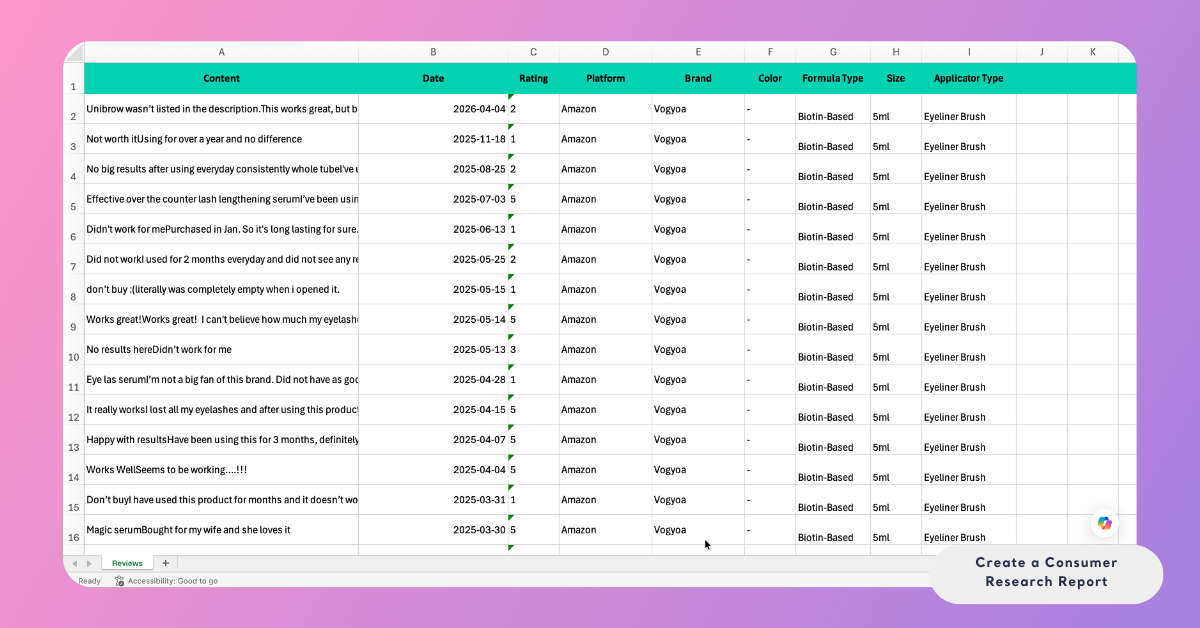
In addition to the review text, the dataset includes structured attributes such as Brand, Formula Type, Applicator Type, Size, Color, Rating, Platform, and Date. These attributes allow us to compare products, benchmark competitors, and uncover deeper patterns throughout the analysis.
Combining customer feedback with structured product attributes enables richer analysis and makes it easier to answer more specific business questions.
Creating Your Report
Now that your dataset is ready, it's time to create your research report in Kimola.
From the Dashboard Home page, upload the sample dataset using the Upload your custom dataset section. Once the upload is complete, Kimola will guide you through a short setup process before generating your report.
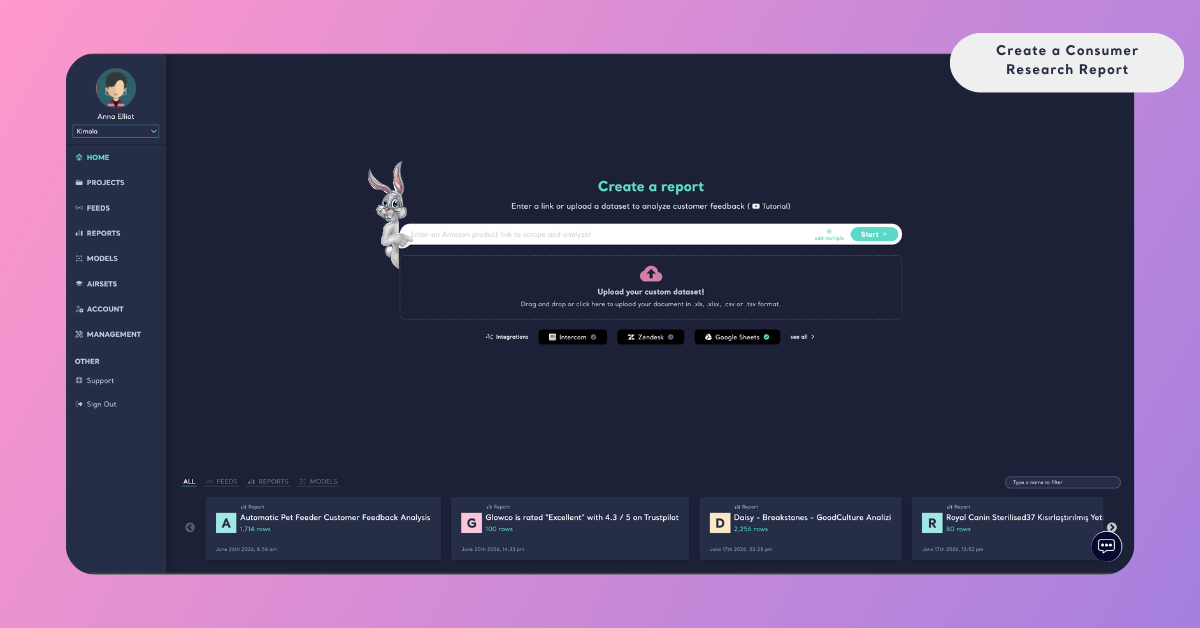
The first step is to review your dataset and map the required columns. Set the Content column as the Text Column so Kimola can identify which field contains the customer feedback to analyze. If your dataset includes additional fields such as Date or URL, you can map those as well.
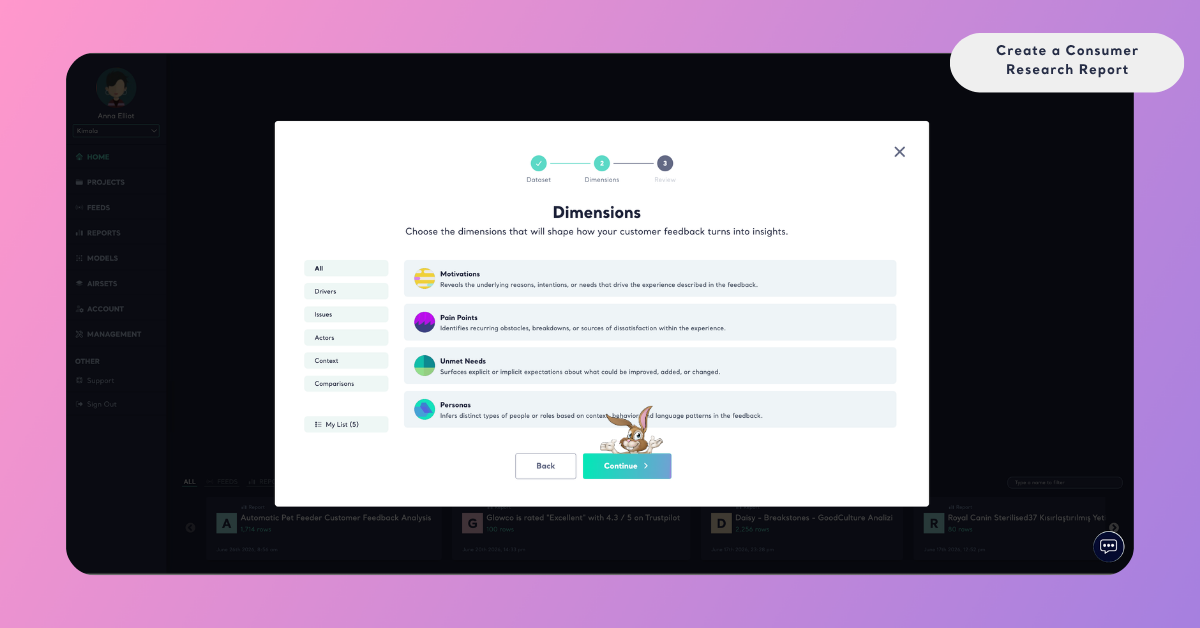
Next, choose the dimensions you'd like to include in your report. Each dimension examines the same customer feedback from a different analytical perspective, allowing you to answer a wide range of consumer research questions.
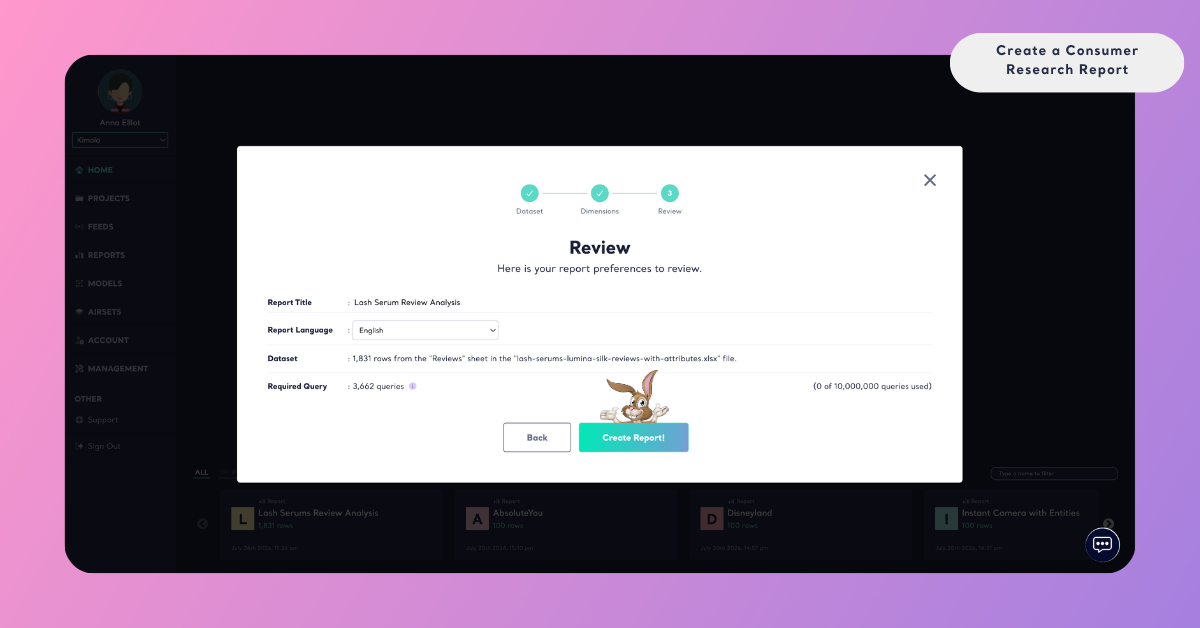
Finally, review your report settings, enter a report name, select the report language, and click Create Report to begin the analysis.
You don't need to select every dimension when creating your report. As your research evolves, you can return at any time to add additional dimensions without creating a new report.
Once your report has been created, Kimola will automatically process the dataset and generate the selected analyses. When processing is complete, you'll be ready to start exploring your findings.
A First Look at Your Report
Your report is now ready to explore.
Instead of navigating through hundreds or thousands of individual reviews, Kimola organizes customer feedback into a structured research report, making it easier to identify recurring patterns, understand consumer behavior, and investigate the questions that matter most to your research.
The Overview page brings these insights together in a single place. It combines high-level metrics, automatically generated Signals, analysis summaries, conversation trends, and direct customer feedback to provide an at-a-glance view of the category.
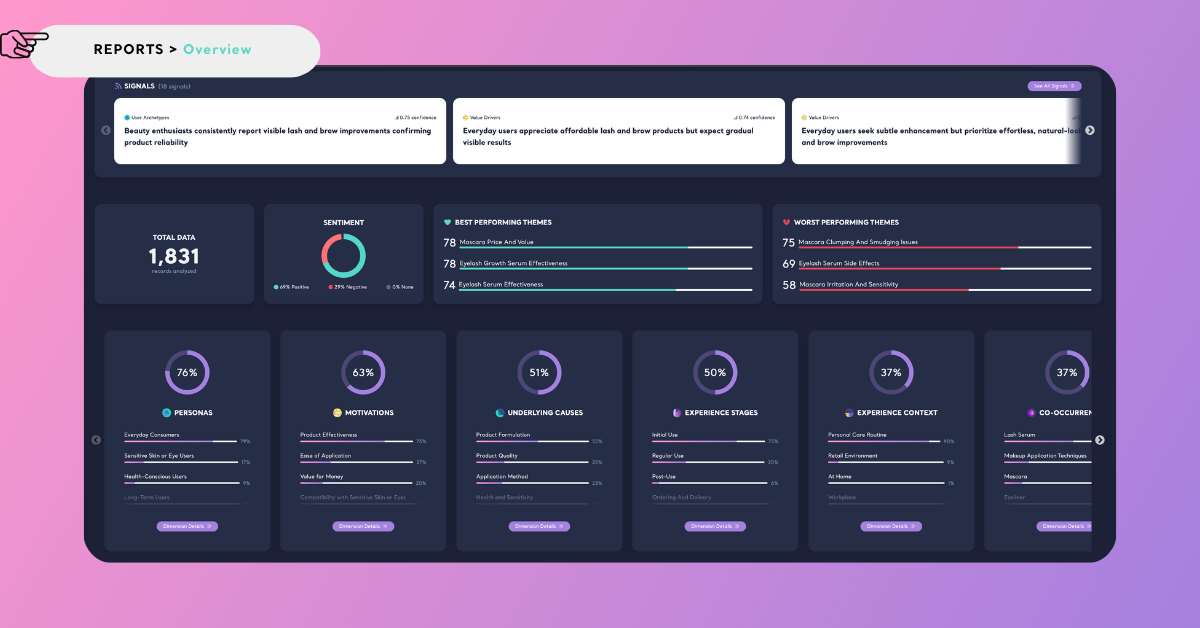
While the Overview offers a useful starting point, consumer research isn't about exploring every analysis one by one. It's about asking the right questions and selecting the analyses that help answer them.
Throughout this tutorial, we'll use the report to answer questions such as:
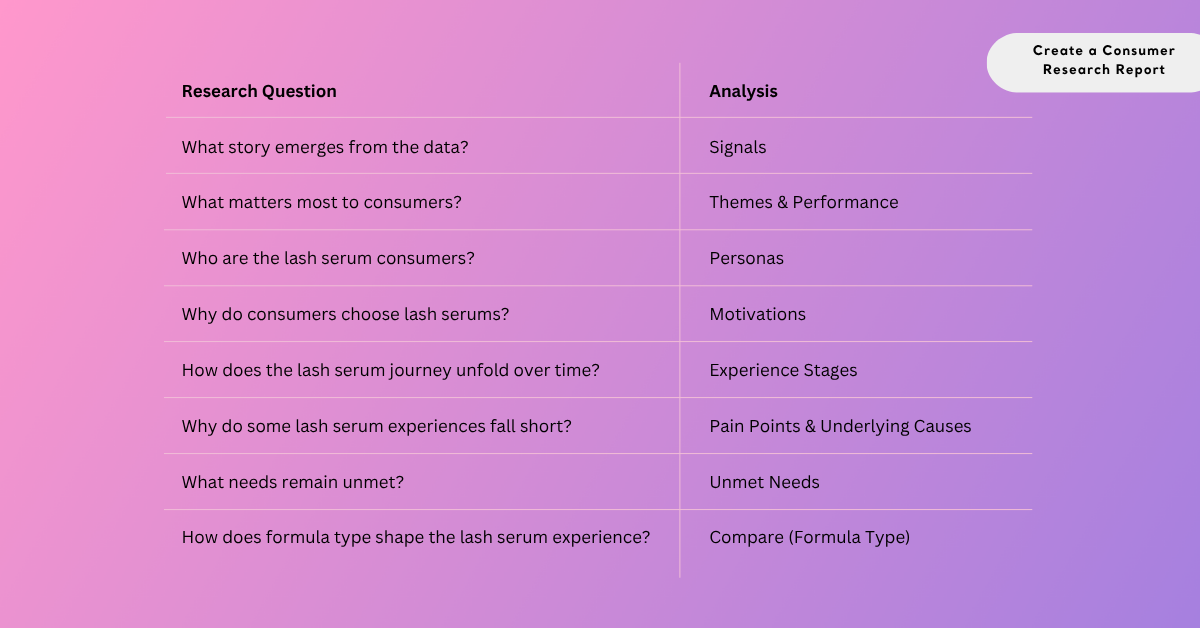
We'll begin with Signals, which connects findings across multiple analyses to reveal patterns that may not be immediately visible when each dimension is viewed on its own.
What Insights Do Signals Uncover
Individual analyses explain different aspects of the consumer experience, but they don't always show how those findings reinforce one another. Signals bridge those connections automatically, identifying recurring relationships across multiple dimensions and surfacing the patterns that define the category as a whole.
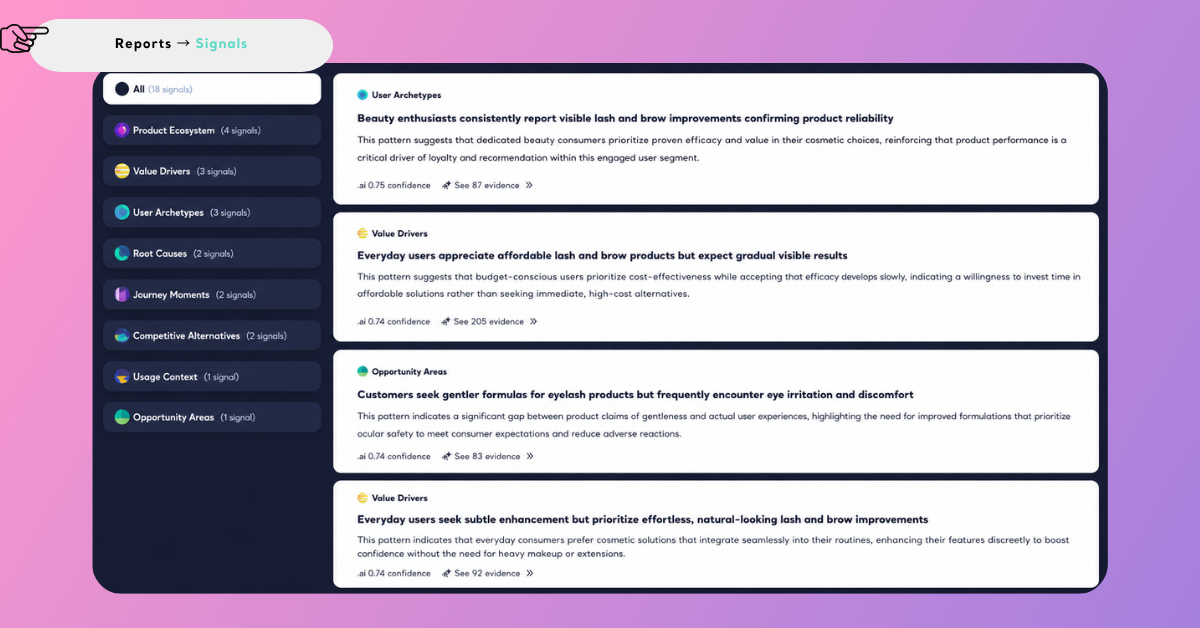
Rather than telling a story of instant transformation, the Signals in this report point to a category built around consistent progress. Across personas, usage contexts, and customer journeys, consumers repeatedly describe lash serums as products that reward routine rather than deliver overnight results. Visible improvement matters most—but so does the willingness to wait for it.
The Signals also reveal that effectiveness is rarely evaluated in isolation. Consumers constantly balance performance against comfort, linking noticeable lash and brow enhancement with concerns about irritation, ingredient sensitivity, and long-term tolerability. In other words, success is defined not simply by whether a serum works, but by whether it works gently enough to become part of an everyday routine.
Another recurring pattern is the role of expectations. Affordable products earn positive attention when they deliver gradual, believable results, while products promising dramatic transformation face greater scrutiny. Even discussions around alternative solutions suggest that many consumers are searching for the right balance between efficacy, safety, cost, and convenience rather than pursuing a single "miracle" product.
Taken together, these Signals suggest that the lash serum category is driven less by dramatic beauty claims than by sustainable, everyday performance. In the following sections, we'll examine the analyses behind these patterns to understand how consumer motivations, experiences, challenges, and unmet needs shape the category.
Signals are generated automatically when your report includes enough analyses to identify meaningful relationships across different dimensions. If your report contains too few analyses, the Signals analysis won't be available.
What Matters Most to Consumers
Consumers don't evaluate lash serums based on a single characteristic. Instead, they assess the overall experience by considering multiple factors—from visible results and growth timelines to application, comfort, value, and potential side effects. Understanding which aspects dominate the conversation is the first step toward understanding what truly defines success in this category.
The Themes analysis automatically organizes customer feedback into recurring discussion topics. Because a single review often mentions several aspects of the product, one review can contribute to multiple themes, providing a more complete picture of the customer experience.
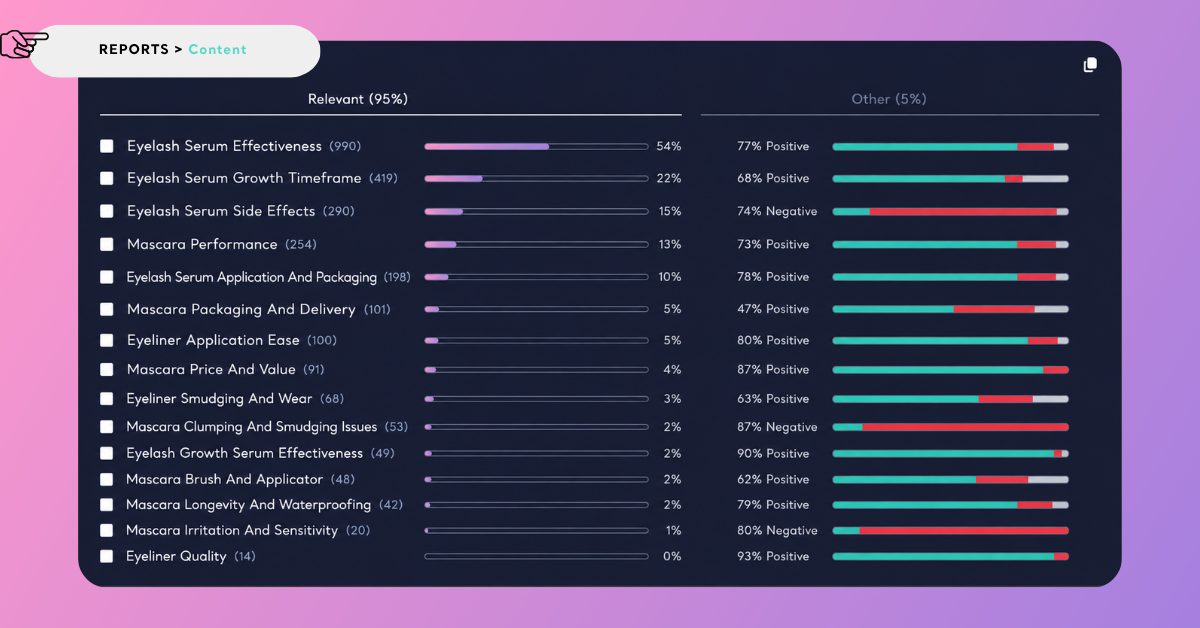
To understand how these themes perform, Kimola complements Themes with the Performance analysis. Rather than relying solely on positive and negative sentiment, Performance calculates statistically adjusted Satisfaction and Dissatisfaction Scores, allowing researchers to compare themes fairly regardless of how frequently they appear.
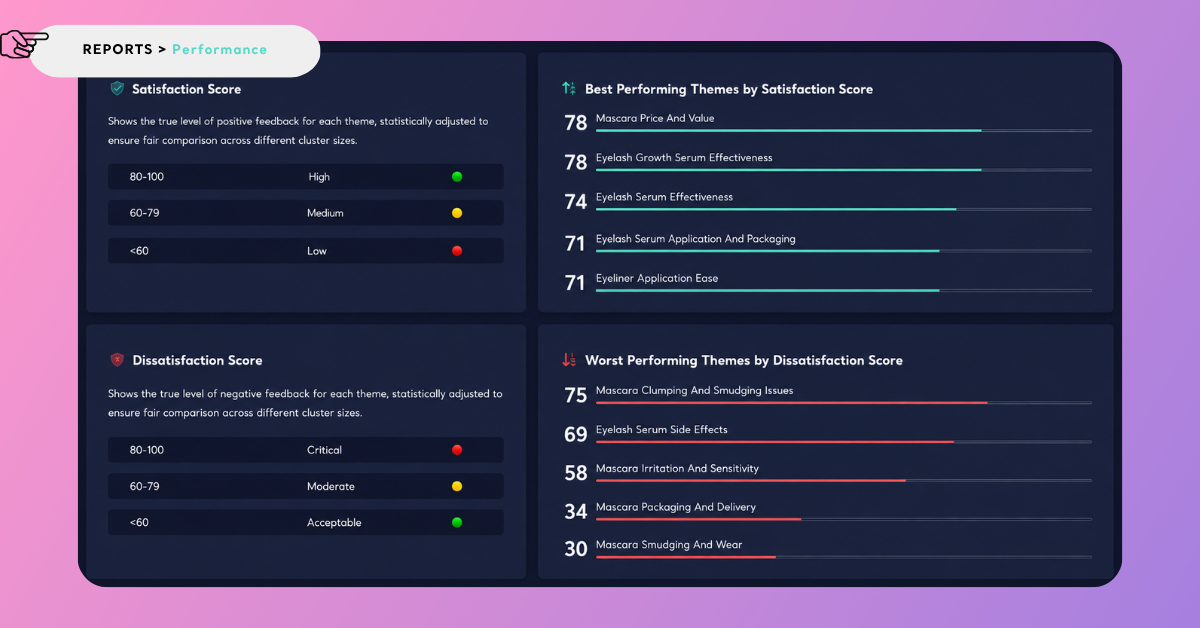
The findings show that Eyelash Serum Effectiveness is by far the dominant theme, appearing in more than half of all conversations. This confirms that consumers primarily judge lash serums by one question: Do they actually work? However, effectiveness is not evaluated in isolation. Growth Timeframe, Side Effects, and Application & Packaging also emerge as major discussion areas, indicating that consumers weigh visible results against the time, comfort, and effort required to achieve them.
Performance provides additional context by revealing which parts of the experience generate the greatest satisfaction—and which create the most frustration. Mascara Price & Value, Eyelash Growth Serum Effectiveness, and Eyelash Serum Effectiveness achieve the highest Satisfaction Scores, suggesting that consumers respond positively when products deliver noticeable improvements while offering good perceived value. In contrast, Mascara Clumping & Smudging Issues, Eyelash Serum Side Effects, and Mascara Irritation & Sensitivity receive the highest Dissatisfaction Scores, highlighting that product tolerability and unwanted reactions remain some of the category's most persistent challenges.
Taken together, Themes and Performance reveal a clear pattern: consumers are willing to invest time in lash serums if they produce visible results, but their satisfaction ultimately depends on achieving those results without irritation or unnecessary trade-offs. This balance between effectiveness and tolerability becomes a recurring theme throughout the rest of the report.
Who Are Today's Eyelash & Brow Serum Consumers
Although lash serums are designed to address a common goal—healthier, fuller-looking lashes and brows—the consumers behind these products are far from homogeneous. Differences in lifestyle, beauty routines, age, sensitivity, and previous experiences all shape how products are selected, used, and evaluated.
The Personas analysis identifies recurring consumer profiles by examining the language, experiences, and behaviors expressed throughout customer reviews. Rather than viewing the category as a single audience, it reveals the distinct groups that influence category trends and product expectations.
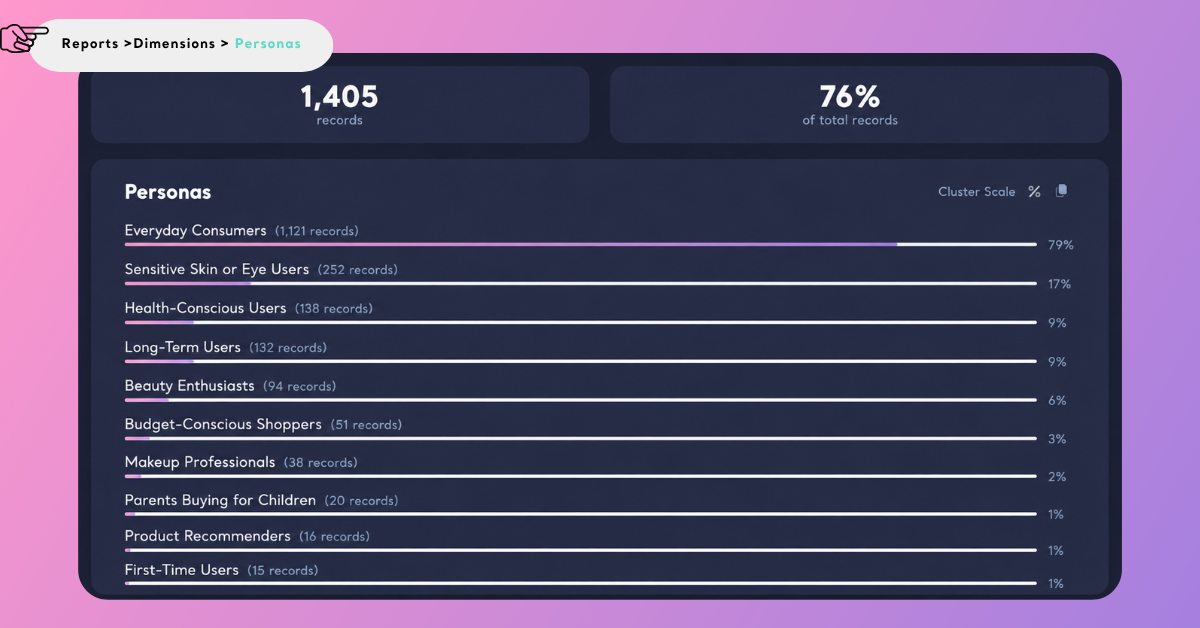
The findings show that everyday beauty consumers account for the majority of conversations, reflecting a category largely driven by individuals seeking naturally fuller lashes and brows through products that fit easily into their daily routines. Alongside this core audience, the category also attracts consumers with more specialized needs, including those managing sensitive eyes or skin, recovering from cosmetic procedures or medical treatments, and mature users addressing gradual age-related thinning. These groups consistently place greater emphasis on product safety, ingredient tolerability, and long-term reliability than on immediate cosmetic transformation.
The analysis also reveals meaningful differences in purchasing behavior. Experienced beauty enthusiasts and makeup professionals actively compare formulations, ingredients, and application experiences across brands, while first-time and value-conscious shoppers tend to prioritize affordability, ease of use, and building confidence through gradual results. Despite these differences, consumers across the category ultimately evaluate products through a similar lens, balancing visible effectiveness with comfort, consistency, and everyday usability.
Taken together, the Personas analysis demonstrates that the lash serum category is shaped by a diverse mix of consumers whose expectations extend well beyond cosmetic outcomes. Recognizing these different user groups helps researchers interpret purchasing motivations, product experiences, and unmet needs with greater context and precision.
Why Do Consumers Choose Lash Serums
While Themes reveal the topics that dominate customer conversations, they don't explain why consumers decide to purchase these products in the first place. Motivations shifts the focus from discussion topics to purchase drivers, identifying the needs, expectations, and desired outcomes that influence product choice.
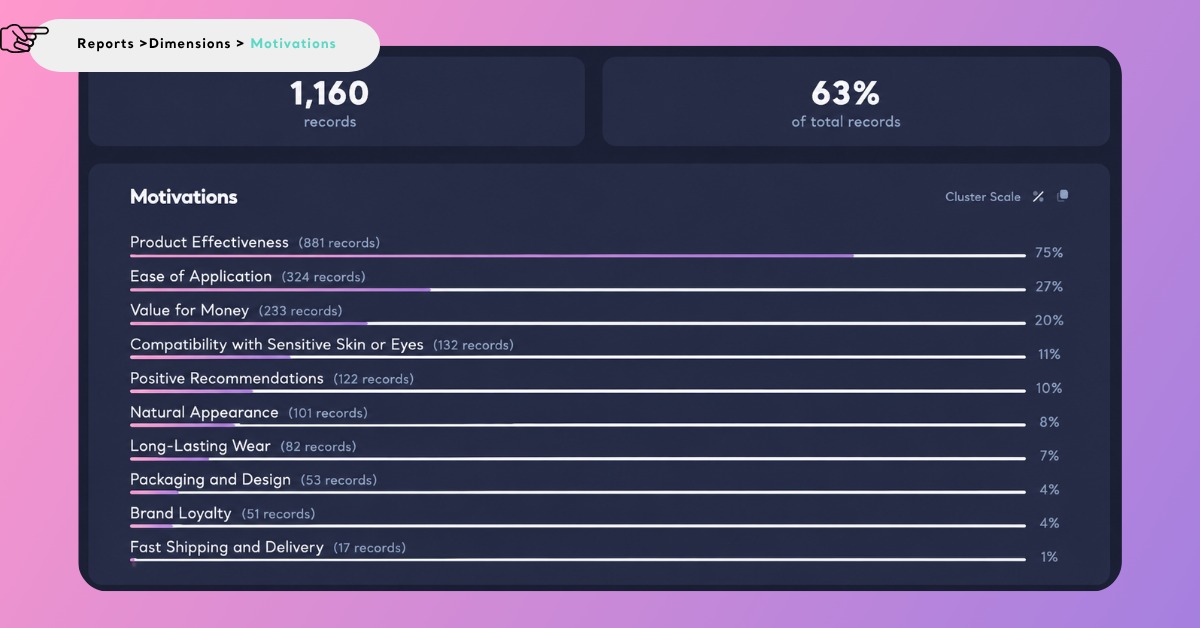
In this dataset, 1,160 reviews (63% of all records) contain explicit purchase motivations, providing a strong foundation for understanding the factors behind consumer decisions.
The analysis makes one priority unmistakably clear: visible product effectiveness dominates nearly every purchasing decision. Three out of four motivation-related reviews emphasize the expectation of longer, fuller, or healthier lashes, making efficacy by far the category's strongest purchase driver. Consumers are not simply looking for another beauty product—they are investing in results they expect to see over time.
Beyond effectiveness, purchasing decisions are shaped by practical considerations that support long-term use. Ease of application, value for money, and compatibility with sensitive eyes emerge as the next most influential motivations, suggesting that consumers value products that fit naturally into daily routines while remaining comfortable and affordable. Recommendations from other users and the desire for natural-looking results further reinforce trust and purchase confidence.
Interestingly, motivations related to packaging, brand loyalty, shipping, and multifunctionality represent only a small share of the conversation. This suggests that these factors rarely drive the initial purchase on their own. Instead, consumers first seek evidence that a product works; convenience, design, and brand familiarity become meaningful only after confidence in efficacy has been established.
Together, these motivations reveal that the lash serum category is fundamentally results-driven. Consumers are willing to invest time and maintain consistent routines, but they expect products to combine proven effectiveness with comfort, simplicity, and value. Understanding these underlying motivations provides essential context for interpreting the challenges, unmet needs, and user experiences explored in the following sections.
How Does the Lash Serum Journey Unfold Over Time
Unlike products that promise instant results, lash serums are evaluated over an extended period of use. The Experience Stages analysis traces how consumer experiences evolve from the first application through regular use, revealing when users begin noticing results, how expectations change over time, and what ultimately shapes satisfaction.
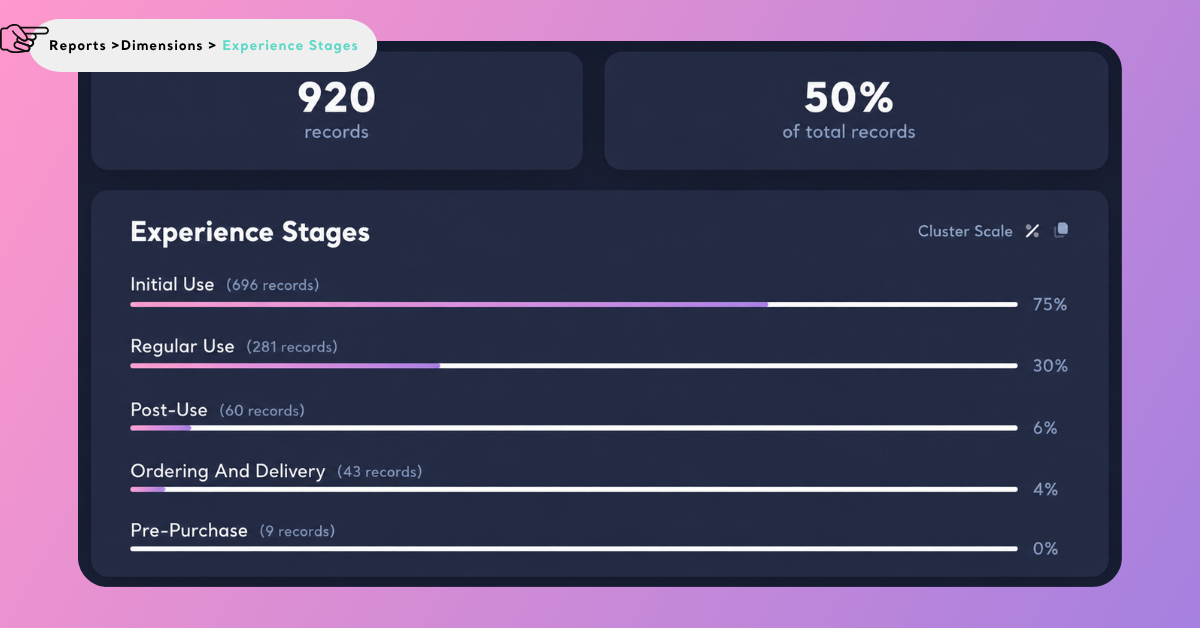
The journey is overwhelmingly concentrated in the early stages of use, where consumers begin establishing daily application routines and monitoring the first visible changes. Initial improvements, such as healthier-looking lashes or reduced brittleness, are often reported within the first few weeks, while more noticeable gains in length, fullness, and density typically require one to three months of consistent application. This gradual progression reinforces that lash serums are products judged over time rather than after only a few uses.
The analysis also shows that continued use is closely tied to long-term satisfaction. Many consumers describe maintaining daily application to preserve results, while others report diminished benefits after discontinuing the product. At the same time, experiences vary considerably between individuals—some observe improvements within days, whereas others report little or no visible change even after several months of use. Together, these patterns highlight that consistency, patience, and realistic expectations are central to the overall lash serum experience.
Why Do Some Lash Serum Experiences Fall Short
While Motivations explain why consumers purchase lash serums and Experience Stages show how their journeys develop over time, they do not fully explain why satisfaction varies so dramatically between users. Some consumers achieve noticeable improvements, while others experience little visible change despite following similar routines. Understanding this gap requires looking beyond outcomes to examine both the challenges consumers face and the factors that contribute to them.
Kimola brings these perspectives together through the Pain Points and Underlying Causes analyses. Pain Points identifies the obstacles and frustrations consumers encounter throughout their experience, while Underlying Causes explores the product, user, and contextual factors that explain why those challenges occur.
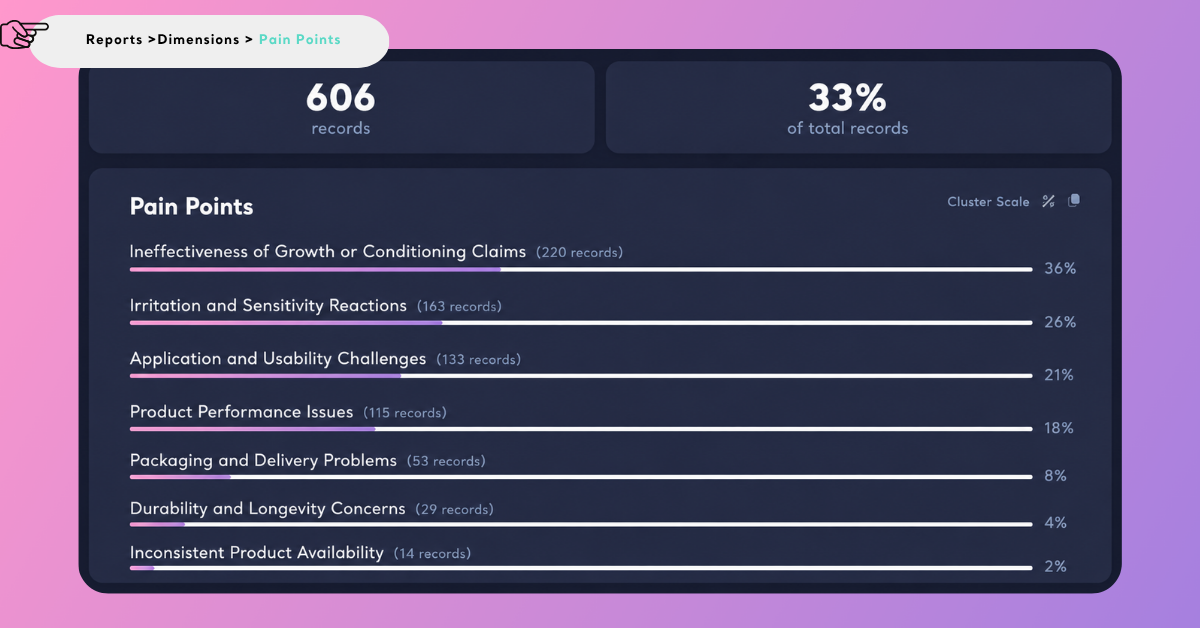
The analyses reveal that the largest source of dissatisfaction is not simply the absence of visible lash growth, but the combination of unmet efficacy expectations and usability challenges. Consumers frequently describe using products consistently for weeks or even months without achieving the fuller or longer lashes they expected. At the same time, irritation, redness, lash shedding, and ingredient sensitivity often discourage continued use, making it difficult for consumers to remain committed long enough to evaluate results.
Beyond efficacy, the overall product experience plays an equally important role. Reviews repeatedly mention applicators that are difficult to control, fragile packaging, products that dry out prematurely, inconsistent product quality, and occasional delivery issues. Although these concerns may seem secondary to effectiveness, they directly affect application consistency, product longevity, and ultimately consumer confidence in the category.
Underlying Causes explains why these experiences differ so widely. Product formulation, ingredient composition, application technique, and individual biological characteristics all influence outcomes. Consumers with different lash conditions, skin sensitivity, or prior cosmetic treatments often respond differently to the same product. Likewise, products that require long-term, consistent application naturally create variation in reported effectiveness, as many users discontinue use before meaningful improvements become visible.
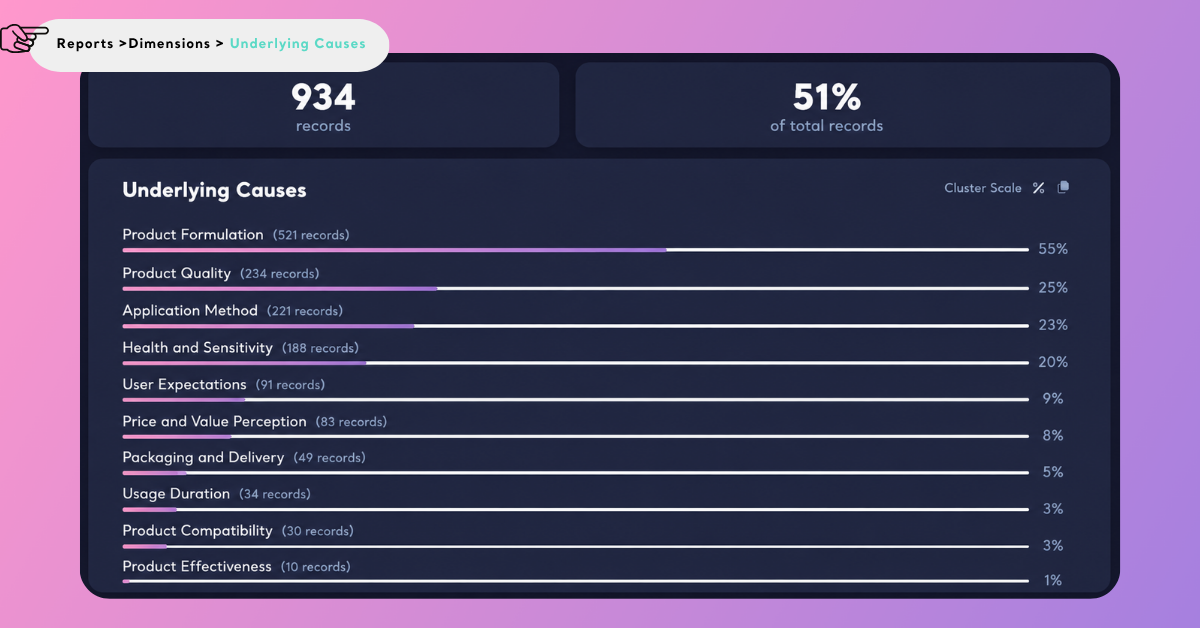
Together, these findings show that lash serum performance cannot be explained by product efficacy alone. Consumer outcomes emerge from the interaction between formulation, individual physiology, consistent application, and overall product quality. Understanding both the barriers consumers encounter and the factors that create them provides a more complete explanation for the diverse experiences observed across the category.
What Would Improve Lash Serums
While consumers evaluate products across different routines and use cases, their expectations converge around a relatively small set of unmet needs. The Unmet Needs analysis identifies the recurring gaps that customers describe throughout their reviews, revealing where current products fall short of category expectations and where future innovation opportunities exist.
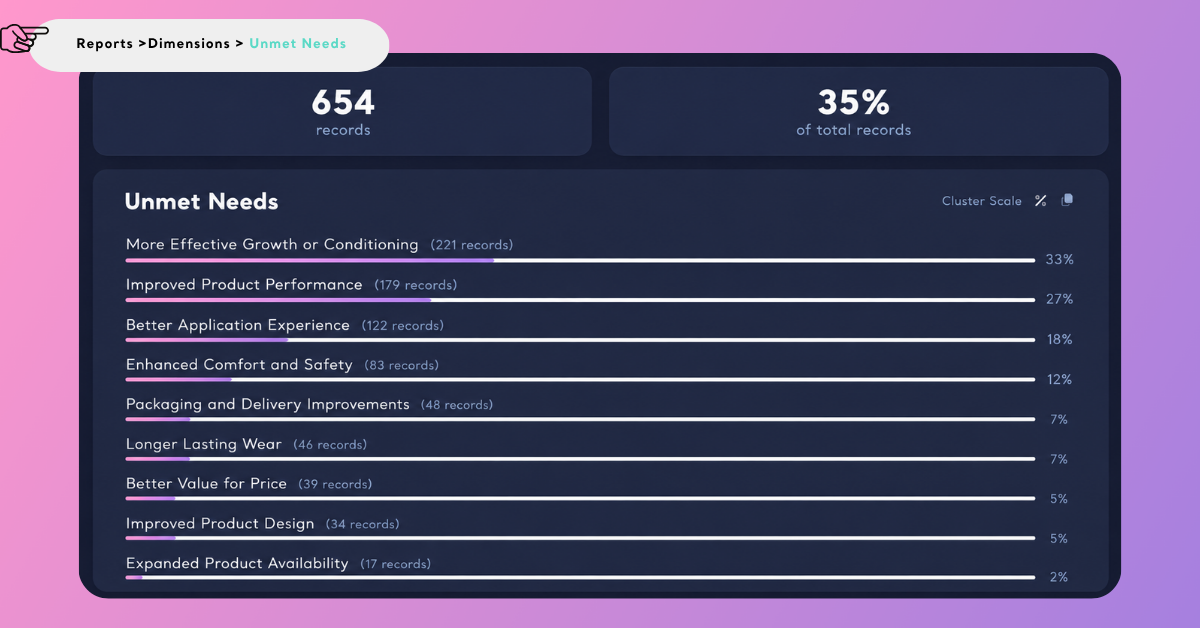
The analysis shows that product efficacy remains the category's most significant unmet need. Consumers want products that produce visible, reliable, and long-lasting results without compromising lash health or causing irritation. Rather than simply promoting growth or cosmetic enhancement, users increasingly expect formulations that strengthen lashes over time while remaining gentle enough for daily use, particularly around sensitive eyes.
Beyond formulation performance, consumers also emphasize the importance of usability throughout the product experience. Reviews frequently mention the need for applicators that provide greater precision and control, clearer application guidance for first-time users, and packaging that preserves product quality while making remaining product volume easier to monitor. These seemingly practical issues strongly influence overall satisfaction and perceived product value.
Trust and product reliability emerge as another recurring expectation. Consumers expect sealed, authentic products delivered in good condition, accompanied by transparent ingredient information and clear communication about product safety. Concerns surrounding damaged packaging, expired products, inconsistent product quality, and delivery issues suggest that confidence in the overall product experience extends well beyond the formulation itself.
Finally, the analysis highlights growing expectations for products that maintain their performance throughout their lifecycle. Users increasingly value formulas that resist drying, flaking, smudging, or losing effectiveness over time, while also providing sufficient product quantity relative to price. Collectively, these findings suggest that future category growth depends not only on improving efficacy, but on delivering a complete consumer experience that combines performance, safety, usability, and reliability.
How Does Formula Type Shape the Lash Serum Experience
Product formulation repeatedly emerges throughout the report as a key factor influencing effectiveness, tolerability, and overall satisfaction. To examine this relationship more closely, the Compare analysis can be used to evaluate structured product attributes alongside the themes identified in customer feedback. In this example, reviews are grouped by formula type to reveal how Biotin-Based, Botanical, Peptide-Based, and Prostaglandin-Based products perform across the aspects that matter most to consumers.
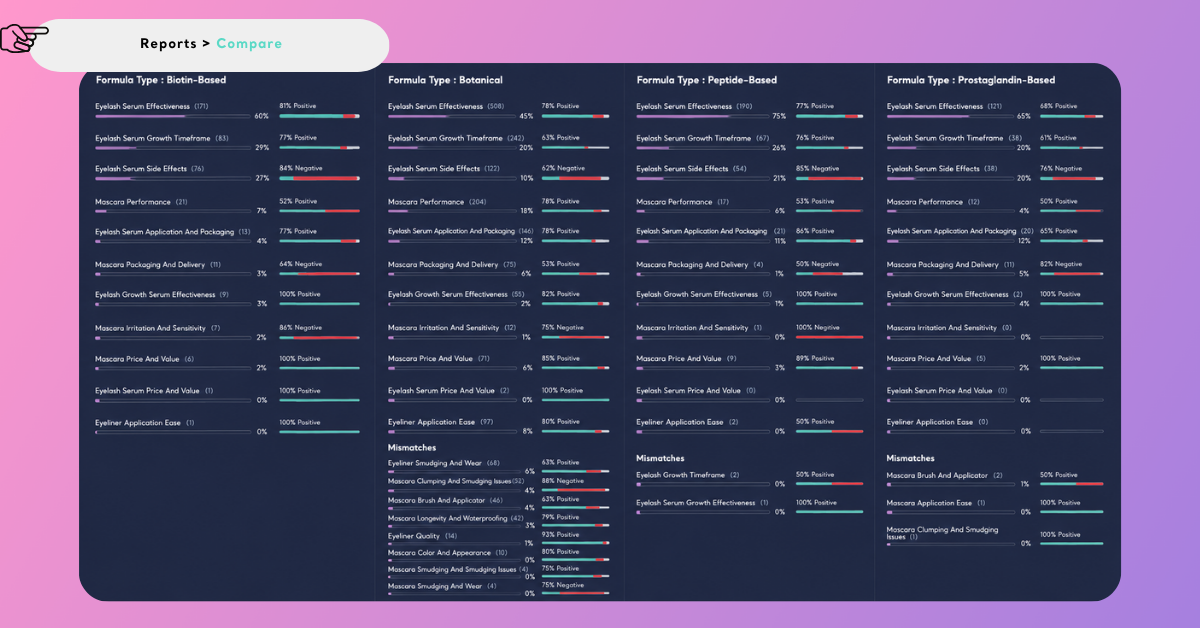
Botanical formulas dominate the dataset, accounting for 61% of the records, and receive the strongest overall sentiment at 72% positive. They also perform consistently well across effectiveness, application and packaging, mascara performance, and value-related themes. This suggests that botanical products are generally perceived as accessible and versatile options that balance everyday usability with satisfactory results.
Biotin-based and peptide-based formulas also receive positive evaluations for eyelash serum effectiveness, reaching 81% and 77% positive sentiment within that theme. However, both formula types show a pronounced contrast between perceived efficacy and tolerability. Discussions of side effects are 84% negative for biotin-based products and 85% negative for peptide-based products, indicating that positive growth experiences do not necessarily translate into an entirely comfortable or risk-free product experience.
Prostaglandin-based formulas show the lowest positive sentiment for eyelash serum effectiveness among the four groups at 68%, while conversations about side effects are predominantly negative. Although these formulas may be associated with visible results, the findings suggest that concerns around irritation and tolerability play a greater role in how consumers evaluate them.
The comparison reveals that formula type does not simply determine whether consumers believe a serum works. It also shapes the balance between visible results, comfort, application experience, and perceived safety. Botanical formulas present the most consistently positive overall experience, whereas biotin-, peptide-, and prostaglandin-based products demonstrate a clearer trade-off between efficacy and adverse reactions.
By comparing Themes across a structured attribute such as Formula Type, researchers can move beyond overall sentiment and identify where specific product configurations perform well or fall short. The same approach can be applied to other relevant columns in the dataset, but only when the selected attribute contributes meaningfully to the research question and category story.
Compare supports up to five values in a single comparison. For the clearest insights, select only the values that are most relevant to your research question. To learn more about filtering and comparing structured attributes, see the Compare Analyses article.
Conclusion
Throughout this tutorial, we've explored how Kimola transforms thousands of customer reviews into a structured consumer research report. By combining analyses such as Signals, Themes, Personas, Motivations, Experience Stages, Pain Points, Unmet Needs, and Compare, researchers can move beyond individual reviews to uncover the patterns that drive consumer behavior.
Rather than answering a single question, these analyses work together to provide a comprehensive understanding of the category—from who consumers are and what they expect to how product attributes influence satisfaction. This structured approach enables teams to identify opportunities for product improvement, benchmark competitors, and make more informed, data-driven decisions.