Creating a Consumer Research Report for the Air Purifier Category
17 mins read - Updated on Jul 14, 2026Air purifiers have become an essential part of many homes, helping consumers improve indoor air quality, reduce allergens, and create healthier living environments. But what actually defines a great air purifier experience? Is clean air enough, or do factors such as noise, maintenance, reliability, and smart features play equally important roles?
In this tutorial, we'll build a complete consumer research report to explore the air purifier category from multiple perspectives. Along the way, we'll examine what consumers value most, why they choose air purifiers, where frustrations emerge, and how different analyses work together to answer meaningful consumer research questions.
By the end of this tutorial, you'll know how to transform customer feedback into actionable consumer insights that support product development, customer experience, and business decisions.
Before we start exploring the analyses, let's prepare the dataset we'll use throughout this tutorial. Download the sample dataset and upload it to your Kimola workspace—we'll use it to build a complete consumer research report from start to finish.
If you don't already have a Kimola account, sign up, log in, and navigate to the Dashboard Home page to get started.
Understanding Your Dataset
Customer feedback becomes much more valuable when it's organized into a structured dataset. Before exploring the analyses, let's take a closer look at the data we'll use throughout this tutorial.
Our sample dataset contains 2,034 customer reviews collected across Aerolux and several competing air purifier brands. Although fictional, it reflects the kind of customer feedback organizations commonly collect from e-commerce platforms, customer surveys, support channels, and online communities.
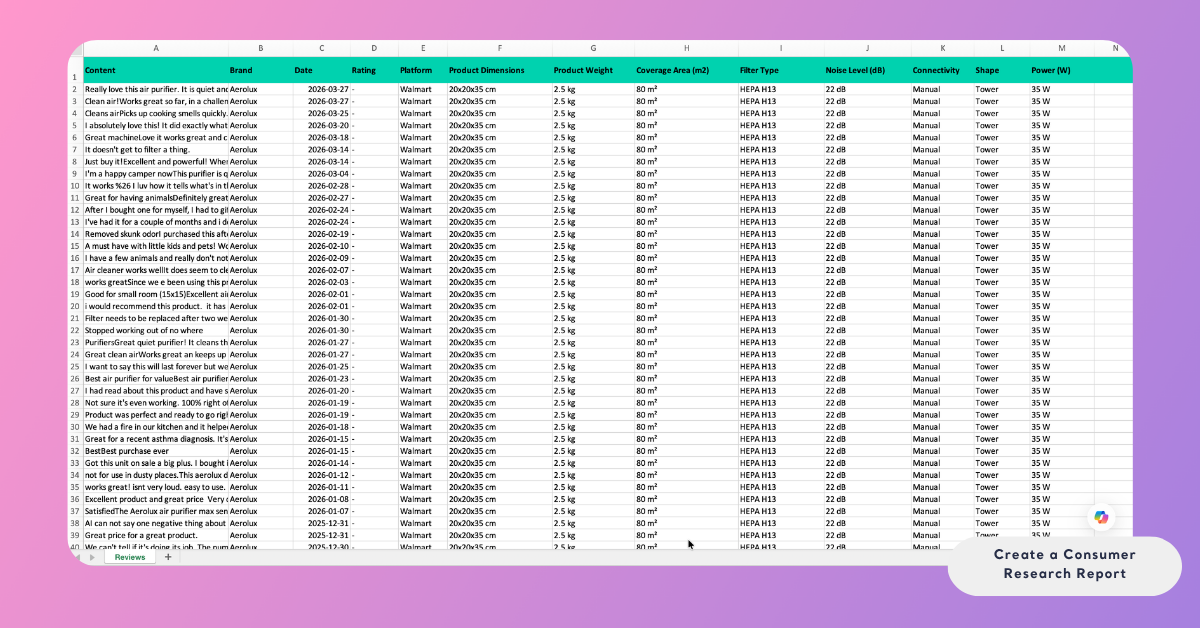
The Content column contains the customer reviews that Kimola analyzes to identify recurring patterns, behaviors, and consumer insights.
Alongside the reviews, the dataset includes structured columns such as Brand, Platform, Coverage Area (m²), Filter Type, Noise Level (dB), Connectivity, Product Dimensions, Product Weight, Power (W), Shape, and Rating. These attributes provide valuable context for every conversation, making it possible to compare products, explore different customer segments, and understand how customer experiences vary across different product specifications.
Think about the questions you want to answer before building your dataset. Including relevant product attributes—such as coverage area, filter type, or connectivity—from the beginning makes it easier to compare results, uncover meaningful patterns, and answer more specific business questions later in your analysis.
Creating Your Report
Now that your dataset is ready, it's time to create your report in Kimola.
From the Dashboard Home page, upload the sample dataset using the Upload your custom dataset section. Once the upload is complete, Kimola will guide you through a short setup process before generating your report.
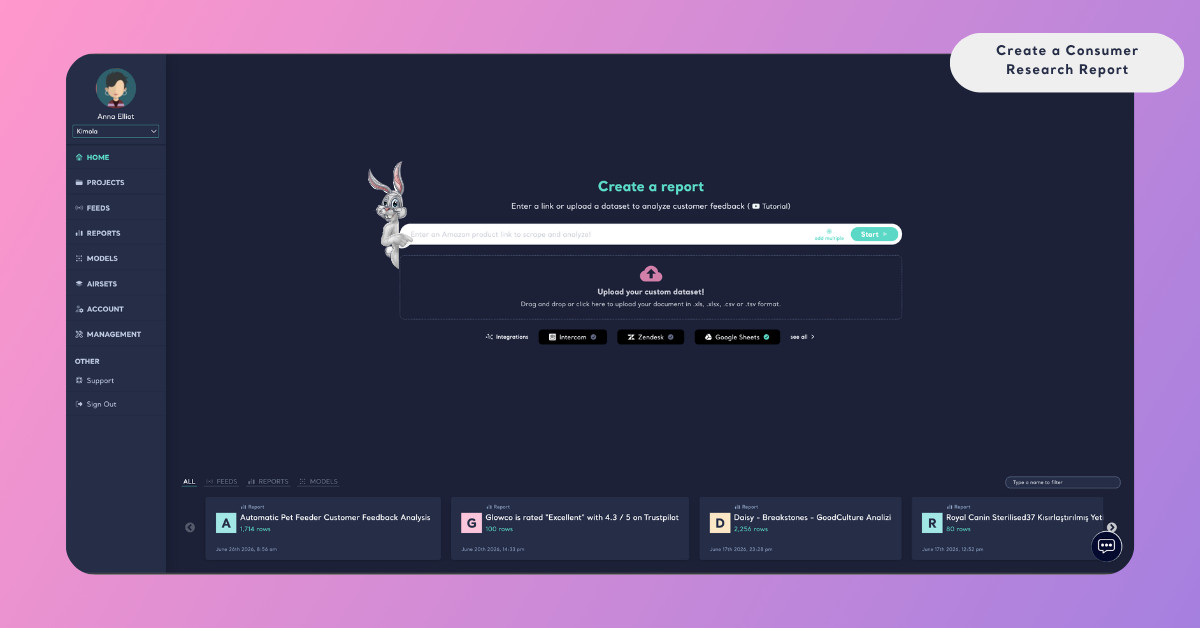
Begin by reviewing your dataset and mapping the required columns. Assign the Content column as the Text Column so Kimola knows which field contains the customer feedback to analyze. If your dataset includes additional fields such as dates, URLs, or structured product attributes, you can map those as well.
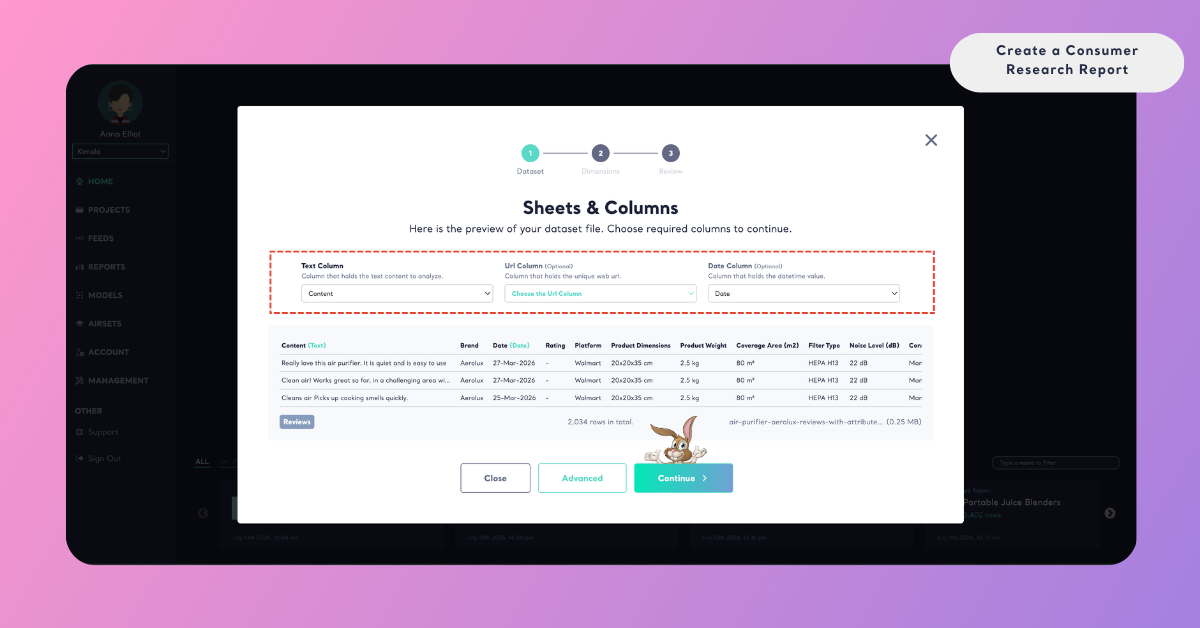
Next, choose the dimensions you want to include in your report. Each dimension examines the same customer feedback from a different perspective, helping answer different consumer research questions.
After selecting your dimensions, review your report settings, enter a report name, choose the report language, and click Create Report.
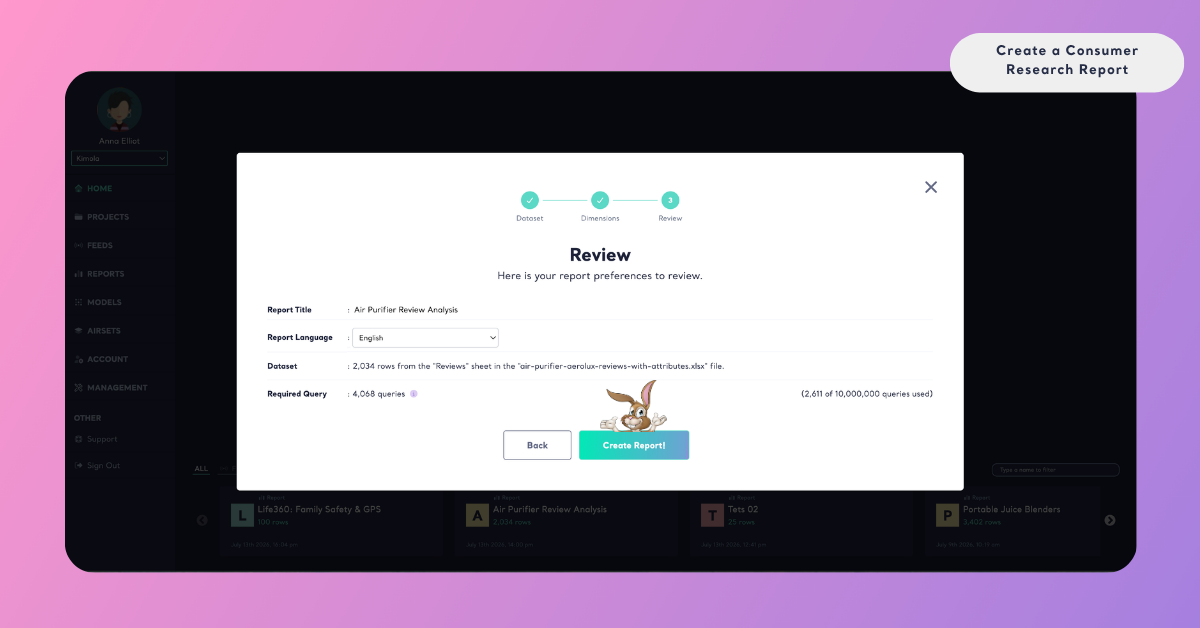
You don't need to include every dimension when creating your report. As your research questions evolve, you can return to the report at any time and add additional dimensions without creating a new report.
Kimola will then process your dataset and automatically generate the selected analyses. Once processing is complete, you'll be ready to start exploring your report.
A First Look at Your Report
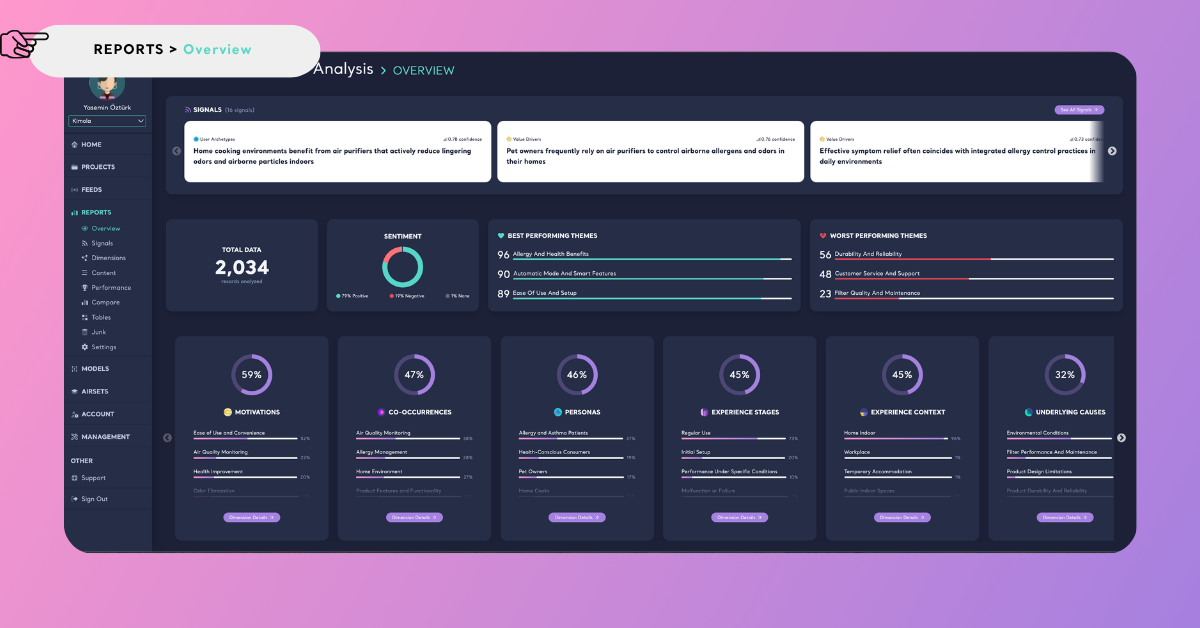
Once your report has been generated, the Overview page provides a high-level summary of your findings. Rather than examining each analysis individually, it offers a quick snapshot of the most important patterns across your dataset, helping you identify where to focus your investigation first.
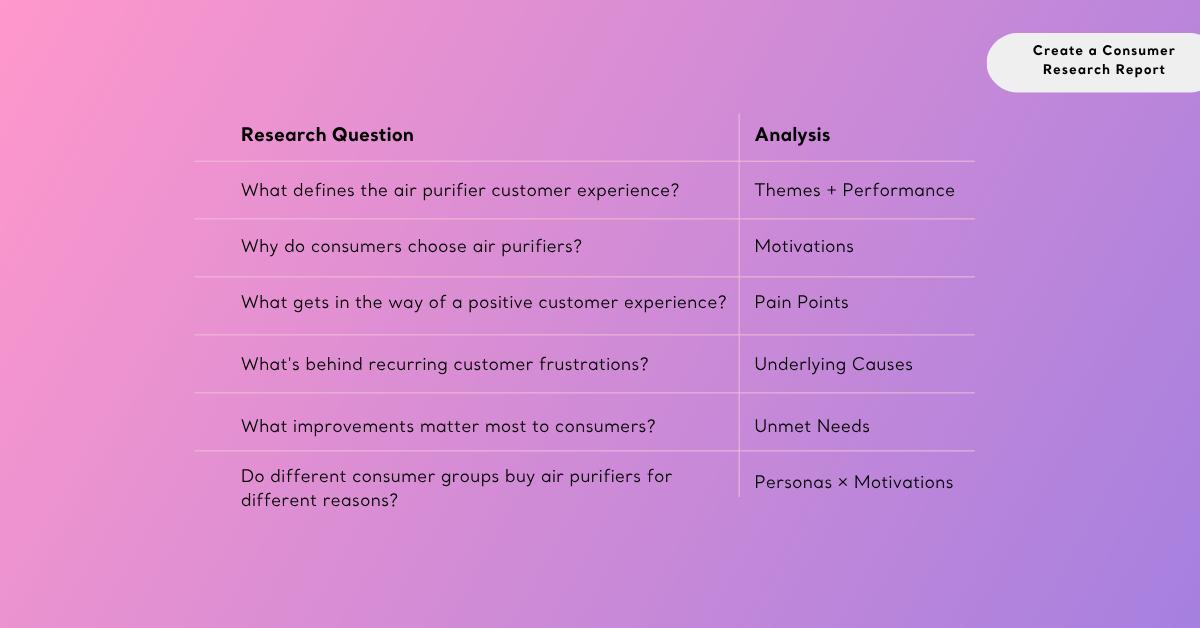
For this report, we'll use different analyses to answer the following research questions:
The Overview page also highlights the overall sentiment distribution, best- and worst-performing themes, automatically generated Signals, and summaries of the selected dimensions. Together, these provide an initial understanding of the category before diving into each analysis in more detail.
The first place to begin is Signals, where relationships across multiple analyses reveal broader patterns that individual dimensions may not show on their own.
Connecting the Dots with Signals
Each analysis in your report answers a specific research question. Signals take this one step further by identifying meaningful relationships across multiple analyses, revealing broader patterns that may not be visible when each result is viewed in isolation.
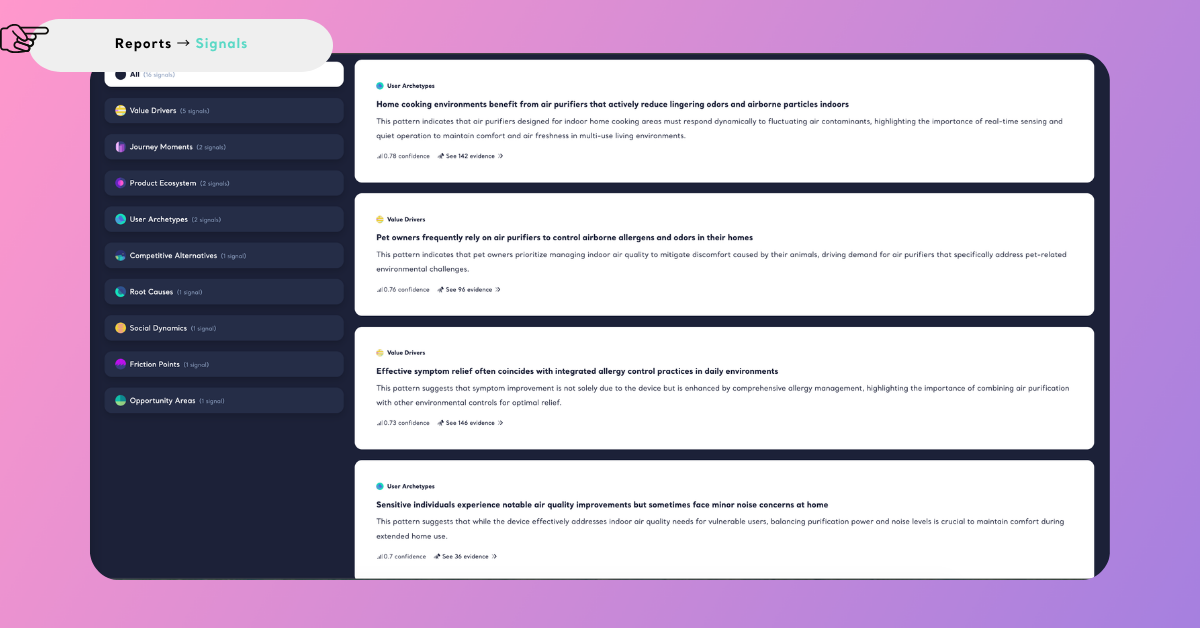
In this report, Signals show that air purifiers are most often discussed within the context of everyday indoor living rather than as standalone appliances. Several patterns connect home environments, pet ownership, cooking activities, and allergy management, demonstrating that consumers view air purification as part of maintaining healthier living spaces rather than simply improving product performance.
The analysis also reveals that different consumer groups often share similar underlying goals. Pet owners focus on controlling allergens and odors, allergy sufferers emphasize symptom relief, and home cooks associate air purifiers with reducing lingering cooking smells. Although these use cases differ, they all point toward the same broader expectation: creating cleaner, healthier indoor environments.
Signals also highlight opportunities for product improvement. While consumers frequently praise improvements in air quality, recurring patterns around noise levels, filter maintenance, and early product failures suggest that long-term satisfaction depends not only on purification performance but also on reliability and ease of ownership.
Rather than interpreting each analysis separately, Signals help researchers understand how different insights connect to form a more complete picture of the customer experience.
Signals are generated automatically when your report includes enough analyses to identify meaningful relationships between different dimensions. If your report contains too few analyses, Signals won't be available.
What Makes an Air Purifier Truly Effective
When consumers evaluate an air purifier, they consider far more than its ability to remove airborne particles. The overall experience is shaped by a combination of purification performance, ease of use, noise levels, maintenance requirements, and long-term reliability.
The Themes analysis groups customer feedback into the main topics discussed across the dataset, while Performance measures how positively or negatively consumers evaluate each theme. Together, these analyses reveal not only what consumers talk about, but also how successfully products deliver across different aspects of the ownership experience.
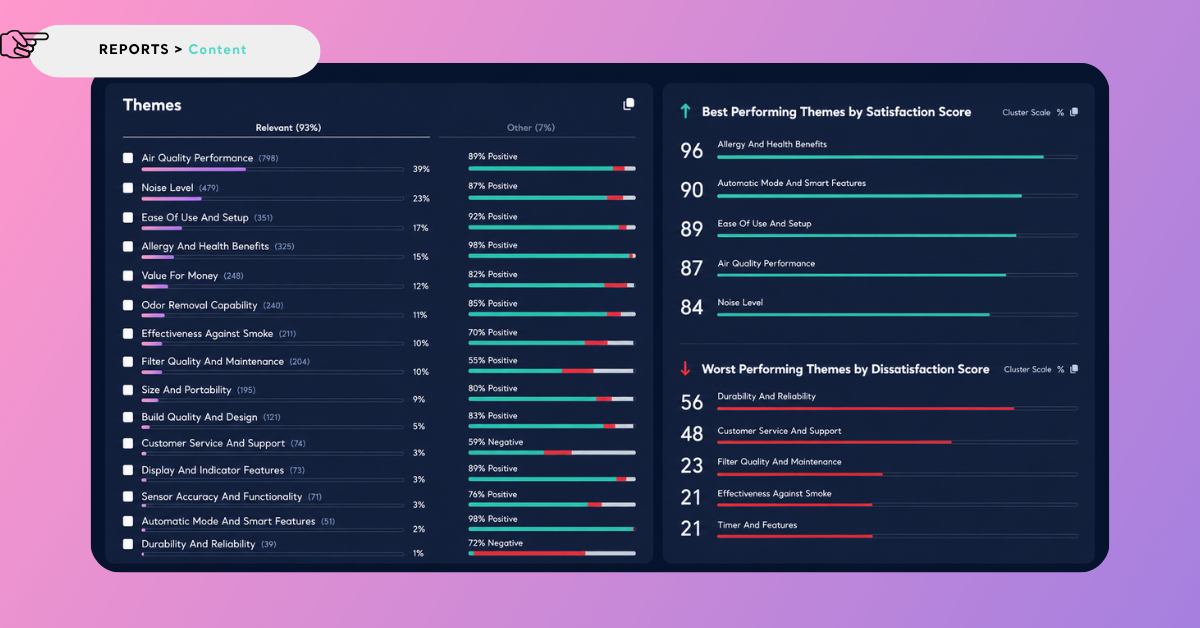
The report shows that Air Quality Performance is the most frequently discussed theme, confirming that effective air purification remains the category's primary focus. Consumers frequently describe improvements in indoor air quality, fresher living spaces, and noticeable reductions in dust and airborne particles.
Health-related outcomes also stand out as one of the category's strongest strengths. Allergy & Health Benefits achieves the highest satisfaction score, suggesting that many consumers experience meaningful relief from allergies and respiratory discomfort after introducing an air purifier into their homes. Ease of Use & Setup, Automatic Mode & Smart Features, and Noise Level also perform well, indicating that convenience and everyday usability play an important role in shaping positive experiences.
At the same time, the analysis highlights several recurring weaknesses. Durability & Reliability, Customer Service & Support, and Filter Quality & Maintenance receive the lowest performance scores, suggesting that long-term ownership often presents greater challenges than initial product use. These issues indicate that while many air purifiers successfully improve indoor air quality, maintaining that experience over time remains an important opportunity for manufacturers.
Taken together, these findings suggest that consumers expect more than just clean air. A successful air purifier is one that combines effective purification with quiet operation, intuitive everyday use, dependable long-term performance, and manageable maintenance requirements.
The next step is understanding why consumers choose air purifiers in the first place and the needs they expect these products to fulfill.
What Are Consumers Really Looking For
Every purchase begins with a need. The Motivations analysis helps researchers identify the problems consumers are trying to solve and the outcomes they hope to achieve when choosing a product. Rather than focusing on product features, it reveals the underlying reasons behind purchase decisions, making it easier to understand what consumers truly value.
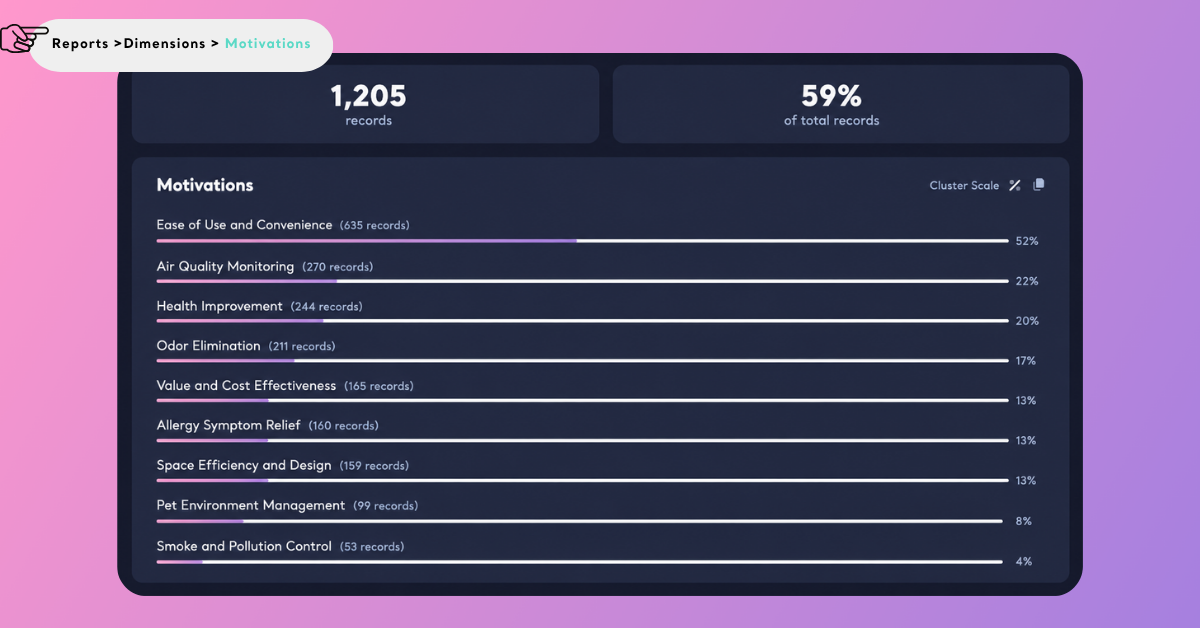
In this report, Ease of Use & Convenience emerges as the strongest purchase driver, highlighting consumers' desire for products that integrate seamlessly into everyday life. Quiet operation, simple setup, automatic functionality, and minimal maintenance all contribute to making air purifiers easy to live with.
Health-related motivations are equally prominent. Air Quality Monitoring, Health Improvement, Odor Elimination, and Allergy Symptom Relief show that consumers primarily purchase air purifiers to create healthier indoor environments, reduce exposure to allergens and pollutants, and improve breathing comfort. Rather than viewing the product as just another household appliance, many consumers describe it as an investment in their wellbeing and quality of life.
The analysis also reveals practical factors that influence purchasing decisions. Motivations such as Value & Cost Effectiveness, Space Efficiency & Design, and Pet Environment Management indicate that consumers carefully balance health benefits with long-term ownership costs, available living space, and the specific air quality challenges they face at home.
For researchers, these findings provide valuable context for interpreting every other analysis in the report. Understanding why consumers purchased an air purifier helps explain why certain frustrations have a greater impact than others. For example, when consumers expect healthier indoor air with minimal effort, issues such as ineffective purification, unreliable sensors, or costly filter maintenance become far more significant because they directly undermine the original reason for purchase.
The next step is exploring the challenges that prevent air purifiers from consistently meeting these expectations.
What Prevents Air Purifiers from Delivering on Their Promise
Positive experiences reveal what consumers value, but they don't always explain why satisfaction falls short. The Pain Points analysis identifies the recurring obstacles that prevent products from meeting consumer expectations, helping researchers understand where the customer experience begins to break down.
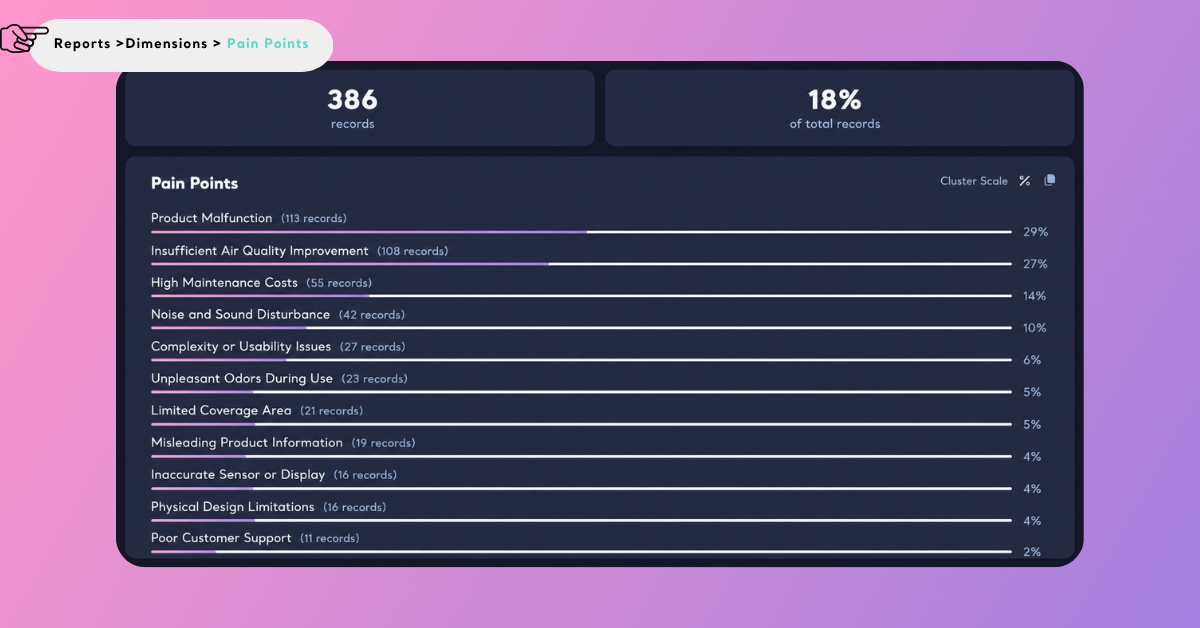
In this report, Product Malfunction emerges as the most common pain point, highlighting frequent reports of premature failures, malfunctioning sensors, unexpected shutdowns, and unreliable operation. These issues reduce confidence in the product and undermine trust in its long-term reliability.
The second most common pain point, Insufficient Air Quality Improvement, reflects an even more fundamental challenge. Many consumers report little or no noticeable improvement in dust, odors, allergens, or smoke despite continuous use. Others question the purifier's coverage area or believe its purification performance falls short of what was advertised. Since improving indoor air quality is the product's primary purpose, these shortcomings have a particularly strong impact on overall satisfaction.
The analysis also highlights recurring frustrations related to High Maintenance Costs, Noise & Sound Disturbance, and Complexity or Usability Issues. Together, these findings suggest that dissatisfaction is not driven by a single defect but by a combination of ownership challenges that affect the product throughout its lifecycle.
For researchers, Pain Points help prioritize improvement opportunities by distinguishing isolated complaints from recurring customer frustrations. When interpreted alongside Themes and Motivations, they reveal not only where the customer experience breaks down, but also which failures have the greatest impact on consumer expectations.
The next step is understanding why these recurring challenges occur by exploring the underlying causes behind them.
Why Do These Problems Keep Occurring
Identifying customer frustrations is an important first step, but solving them requires understanding why they occur. The Underlying Causes analysis uncovers the factors that repeatedly contribute to customer dissatisfaction, helping researchers move beyond symptoms to identify the root causes behind recurring problems.
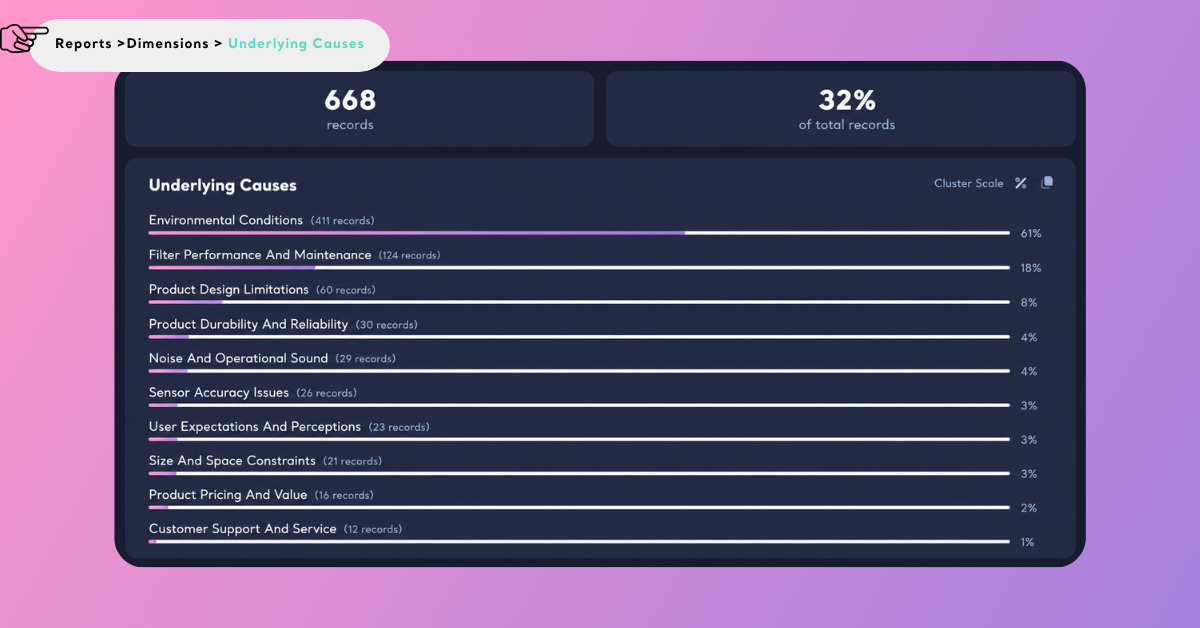
In this report, the analysis shows that many frustrations stem from the interaction between product design limitations, environmental conditions, and quality-related issues rather than isolated product defects. Air purifiers are often expected to perform in challenging environments affected by pet dander, smoke, dust, and other airborne pollutants, yet smaller or underpowered models frequently struggle to meet these demands.
The analysis also highlights recurring issues surrounding filter performance and maintenance. Filters may clog more quickly than expected, replacement guidance is often unclear, and replacement filters can be expensive or difficult to obtain. At the same time, sensor inaccuracies reduce confidence in automatic features, while misleading coverage claims or unrealistic performance expectations create further dissatisfaction when real-world results differ from marketing messages.
Rather than pointing to a single root cause, the findings demonstrate that customer frustrations are usually the result of several interconnected factors. Product design, manufacturing quality, environmental conditions, maintenance requirements, and communication all contribute to the overall ownership experience.
For researchers, Underlying Causes help explain why recurring pain points emerge and where meaningful improvements are most likely to have the greatest impact. Instead of treating customer complaints as isolated issues, researchers can identify broader patterns that inform product development, quality improvement, and customer communication strategies.
The next step is exploring which improvements consumers want most and how those expectations can guide future product development.
What Would Make Air Purifiers Better
Customer frustrations reveal where products fall short, but they don't necessarily explain what consumers want instead. The Unmet Needs analysis identifies the improvements customers repeatedly ask for, helping researchers understand where innovation and product development can create the greatest impact.
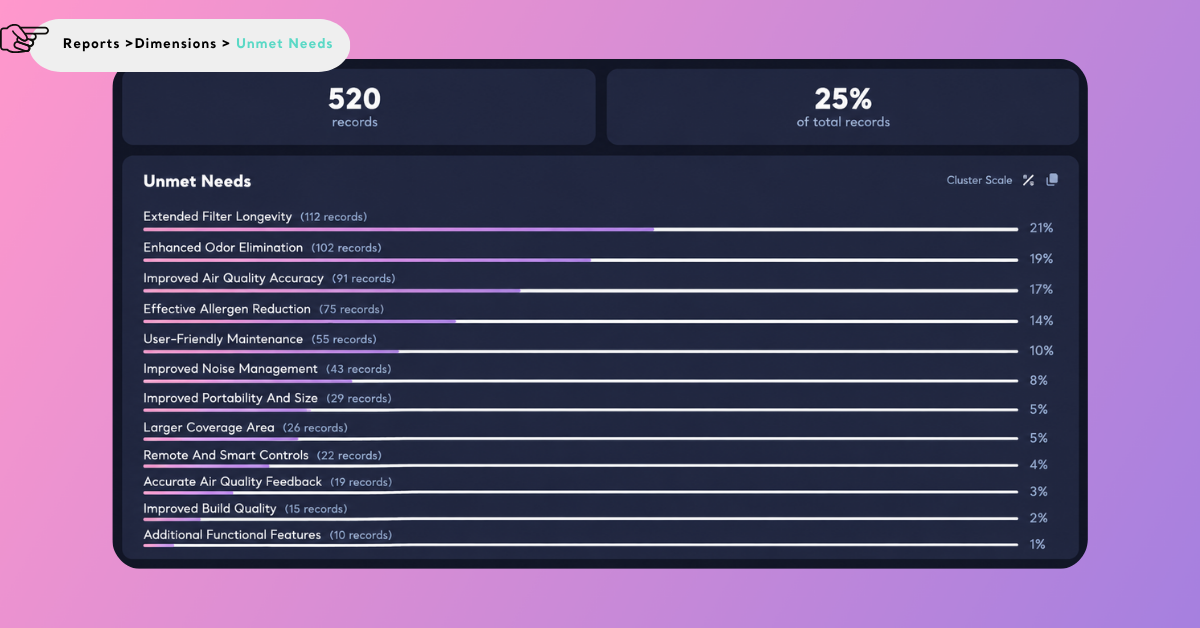
In this report, the most frequently expressed need is Extended Filter Longevity. Consumers consistently ask for filters that last longer, cost less to replace, and are easier to purchase. Rather than questioning the importance of filtration itself, many users want a maintenance experience that is simpler, more affordable, and better supported over the product's lifetime.
Performance improvements also emerge as clear priorities. Enhanced Odor Elimination, Improved Air Quality Accuracy, and Effective Allergen Reduction show that consumers expect air purifiers to deliver more consistent and measurable results. They want greater confidence that the product is effectively removing odors, reducing allergens, and accurately reflecting indoor air quality through its sensors and displays.
Beyond purification performance, users also highlight opportunities to improve the ownership experience. Requests for User-Friendly Maintenance, Improved Noise Management, Larger Coverage Area, and Remote & Smart Controls suggest that consumers value products that are easier to maintain, quieter to operate, and better suited to different living environments.
For researchers, Unmet Needs transform customer feedback into a roadmap for future development. Rather than focusing only on today's problems, this analysis highlights the capabilities consumers want to see in future products. When interpreted alongside Pain Points and Underlying Causes, it becomes easier to distinguish between isolated complaints and recurring opportunities for innovation.
The next step is exploring how these expectations differ across consumer groups. By combining Personas with Motivations, we can better understand whether different segments turn to air purifiers for different reasons and prioritize different outcomes.
How Do Consumer Priorities Differ
Understanding who is participating in the conversation is just as important as understanding what they say. The Personas analysis groups together consumers who share similar goals, behaviors, and experiences, helping researchers identify the distinct customer segments within a category.
While Personas provide valuable insights on their own, they become even more powerful when interpreted alongside other analyses. Combining Personas with dimensions such as Motivations, Pain Points, Unmet Needs, or Experience Context helps researchers understand how different consumer groups vary in their needs, challenges, and expectations. In this tutorial, we'll combine Personas with Motivations to explore why different consumer groups turn to air purifiers and what they hope to achieve.
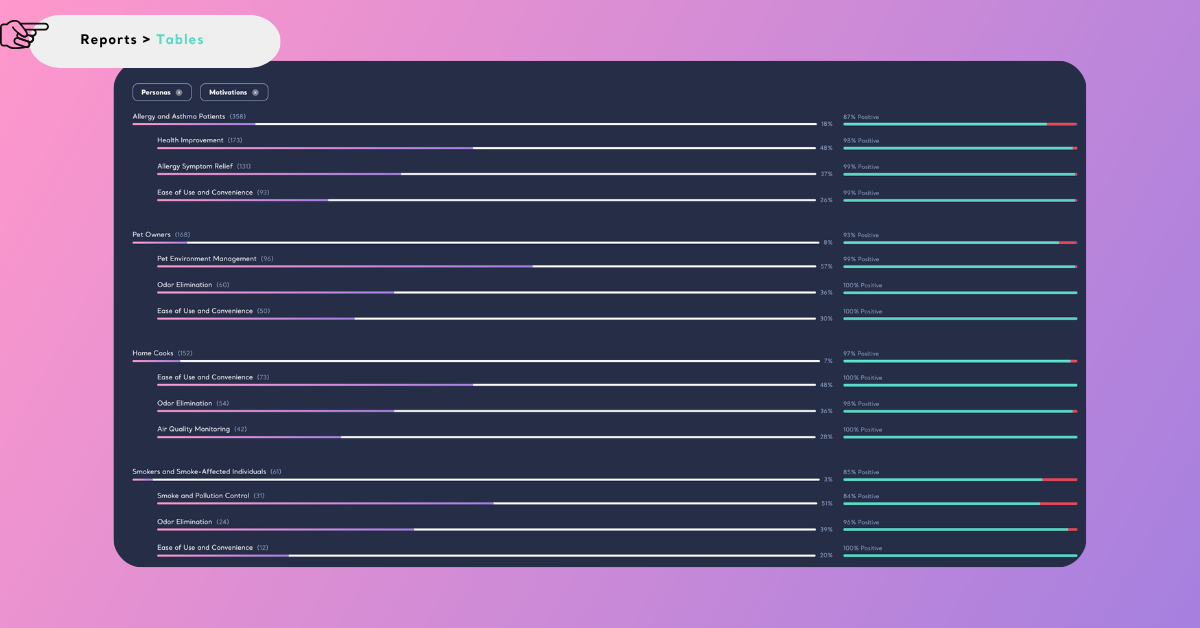
The analysis shows that Allergy & Asthma Patients represent the largest consumer segment. Their motivations are strongly centered around Health Improvement and Allergy Symptom Relief, indicating that they primarily view air purifiers as solutions for improving respiratory wellbeing.
Other consumer groups demonstrate different priorities. Pet Owners are primarily motivated by Pet Environment Management and Odor Elimination, while Health-Conscious Consumers place greater emphasis on Ease of Use & Convenience together with Air Quality Monitoring. These contrasting motivations illustrate that consumers enter the category with different goals, even when purchasing the same type of product.
For researchers, this combination provides a much richer understanding than either analysis alone. Rather than treating all consumers as a single audience, researchers can identify which needs matter most to different customer segments, supporting more targeted product development, positioning, and communication strategies.
The next step is exploring whether these differences extend beyond consumer groups to the products themselves. By comparing different product configurations, we can investigate whether certain specifications consistently lead to different customer experiences.
How Do Product Specifications Shape Customer Experience
Throughout this report, two product characteristics have consistently emerged as important factors shaping the customer experience: Coverage Area and Filter Type. Consumers repeatedly discuss whether an air purifier can effectively clean the spaces they use most, while filter performance and maintenance remain central to long-term satisfaction.
These recurring findings naturally lead to another research question: do different product specifications actually influence the customer experience?
The Compare analysis allows researchers to test this question by examining customer feedback across structured product attributes. Instead of treating every air purifier as a single product category, Compare makes it possible to evaluate how different configurations influence consumer perceptions and identify which specifications have the greatest impact on satisfaction.
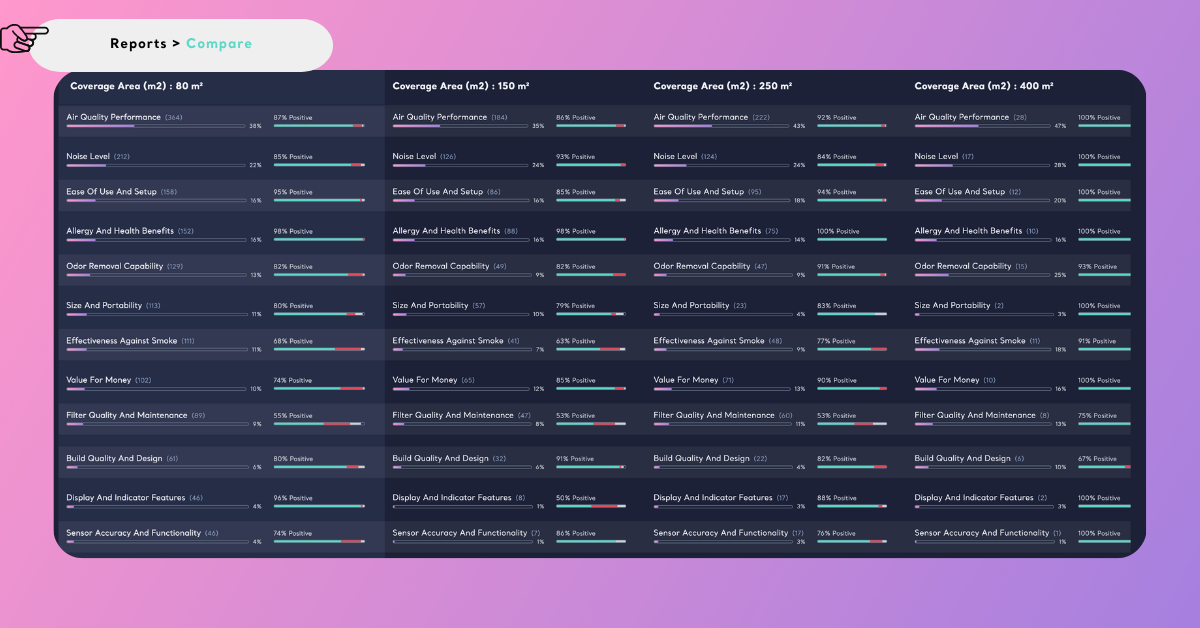
Comparing products by Coverage Area shows that air purification performance remains the dominant topic regardless of room size, but customer expectations evolve as coverage increases. Larger-capacity models receive stronger discussions around overall air quality performance and effectiveness in spacious environments, while value, portability, and maintenance continue to play a more prominent role for smaller-capacity units. This comparison highlights how intended usage environments shape customer expectations beyond overall product satisfaction.
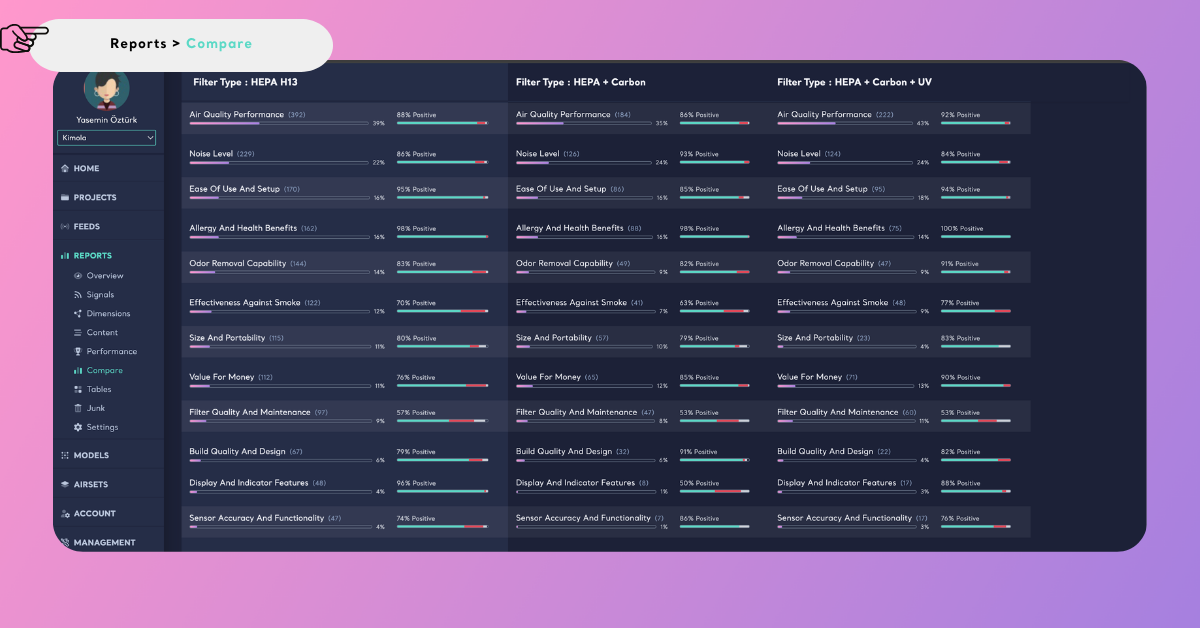
A similar pattern emerges when comparing different Filter Types. Models combining HEPA, Carbon, and UV technology generally receive stronger positive sentiment around air quality performance, odor removal, and allergy-related benefits than simpler filtration systems. At the same time, discussions around filter maintenance remain consistent across all filter types, suggesting that consumers evaluate filtration technologies not only by purification effectiveness but also by the long-term ownership experience they create.
For researchers, Compare helps validate assumptions using real customer feedback. Rather than assuming that a larger coverage area or a more advanced filter automatically creates a better customer experience, researchers can investigate whether these product characteristics consistently influence consumer perceptions. This provides stronger evidence for product positioning, feature prioritization, and future product development decisions.
Compare supports up to five values at a time. For the clearest results, compare only the values that are most relevant to your research question. See the Compare Analyses article to learn more about filtering and comparing structured column values.
Conclusion
Customer feedback contains far more than individual opinions about products. When combined with structured analyses, it becomes a powerful source of consumer intelligence that helps explain not only what consumers experience, but also why they experience it.
Throughout this tutorial, we've built a complete consumer research report using a fictional air purifier dataset. Along the way, we've explored how different analyses answer different research questions. Themes revealed the experiences that define the category, Motivations explained why consumers purchase air purifiers, Pain Points and Underlying Causes uncovered the challenges that limit satisfaction, while Unmet Needs highlighted opportunities for future innovation. By combining Personas with Motivations, we saw how different consumer groups enter the category with different priorities, and Compare demonstrated how product specifications can influence customer experiences across different configurations.
No single analysis tells the whole story. Meaningful consumer insights emerge when these perspectives are interpreted together, allowing researchers to move beyond isolated comments and develop a more complete understanding of customer behavior.
Although this tutorial focuses on the air purifier category, the same research workflow can be applied across virtually any product or service category. Whether you're analyzing smart home devices, consumer electronics, home appliances, or healthcare products, the process remains the same: start with a well-structured dataset, define the business questions you want to answer, choose the analyses that best address those questions, and connect the findings into a coherent consumer story.
Now it's your turn.
Download the sample dataset, recreate this report in your own Kimola workspace, and start exploring the questions that matter most for your business.
- Creating a Consumer Research Report for the Automatic Pet Feeder Category
- Creating a Consumer Research Report for the Portable Juice Blender Category
- Creating a Consumer Research Report for the Instant Camera Category
- Creating a Consumer Research Report for the Lash Serum Category
- Creating a Consumer Research Report for the Matcha Category