Tasks: From a Finding to Work
Customers Notice
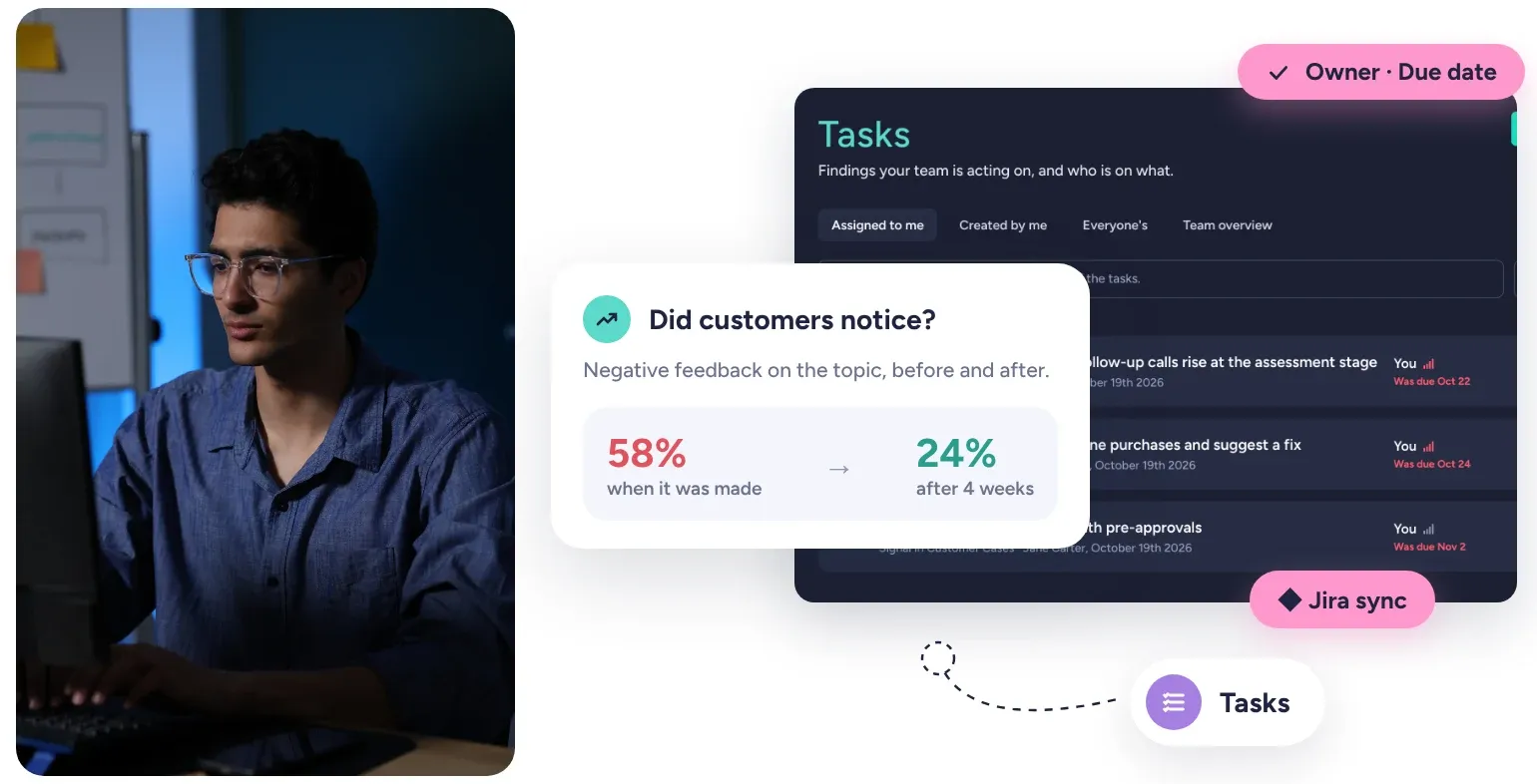
Kimola turns a finding into work for one teammate, with its evidence attached, and reads the same feedback again to tell whether customers noticed.















3,000+ teams in more than 90 countries use Kimola.
Where Findings Get Lost
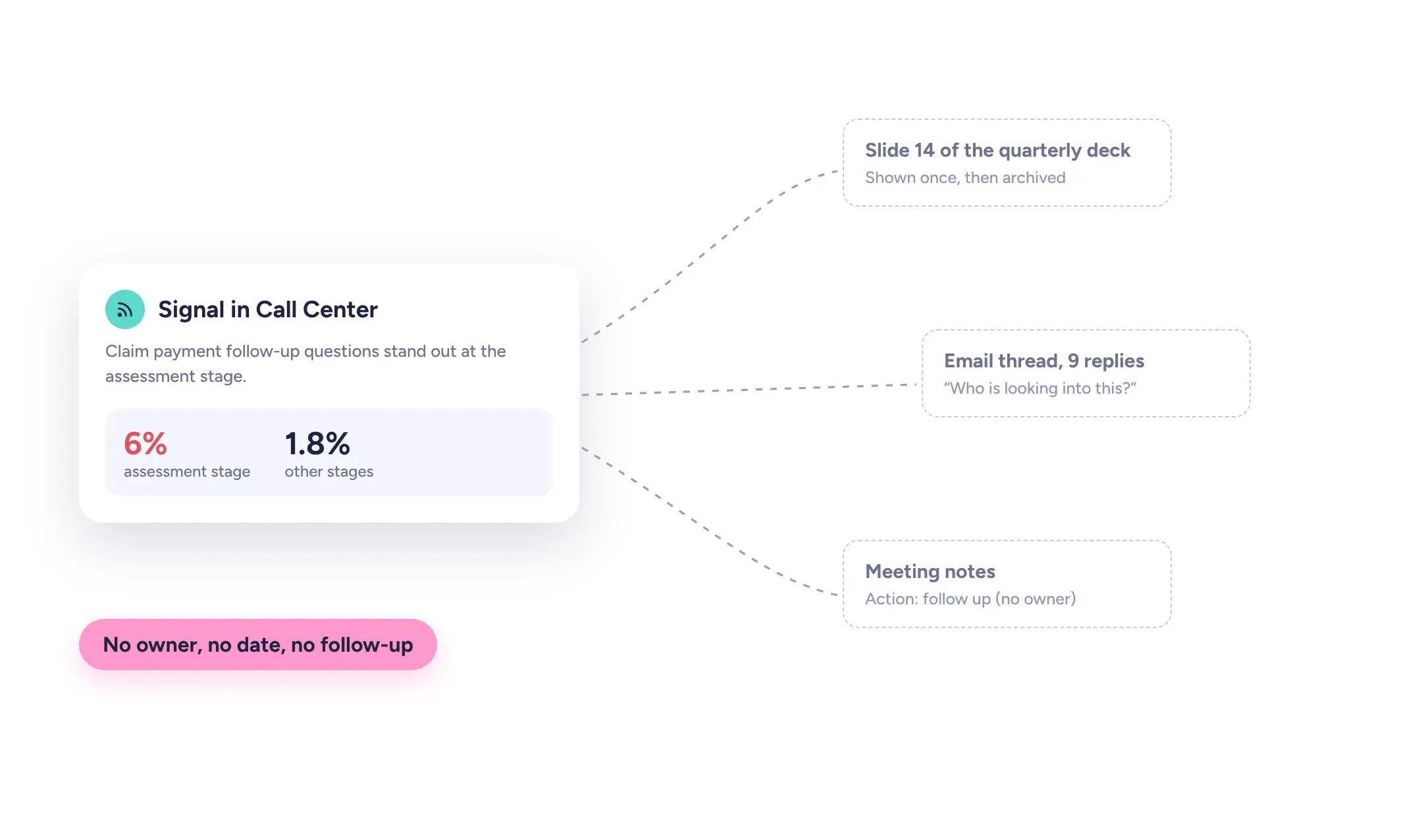
Acting on a finding takes more than reading it. Someone has to own it, someone has to know why it matters, and someone has to check later whether the change made a difference. Passed on as a message or a screenshot, the numbers and the customers' words stay behind.
A Task carries the finding to one teammate, and Kimola freezes its evidence as it is that day: its share of the feedback, its sentiment and a few quotes in customers' own words.
Made Where the Finding Is
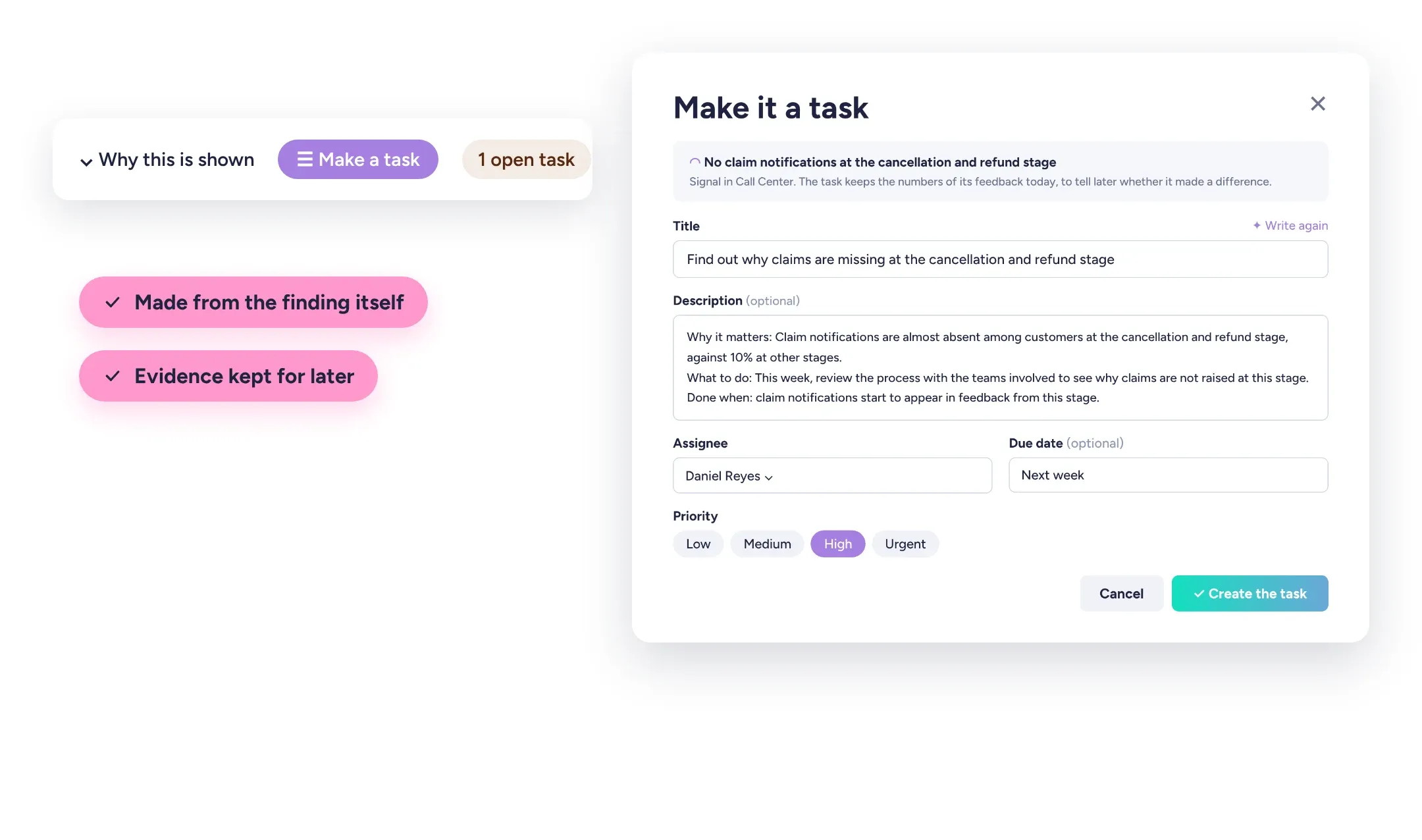
A Task starts from the finding itself: a Signal, a theme, an action of an Action Plan, a filtered view, a table, a Customer or a Department. Kimola drafts the title and description from what it found, and you choose the assignee, the due date, the priority and who to keep informed.
Whoever picks it up reads the problem in customers' own words, without opening the Space. Work that doesn't come from feedback can be written as a Task in your own words.
Did Customers Notice?
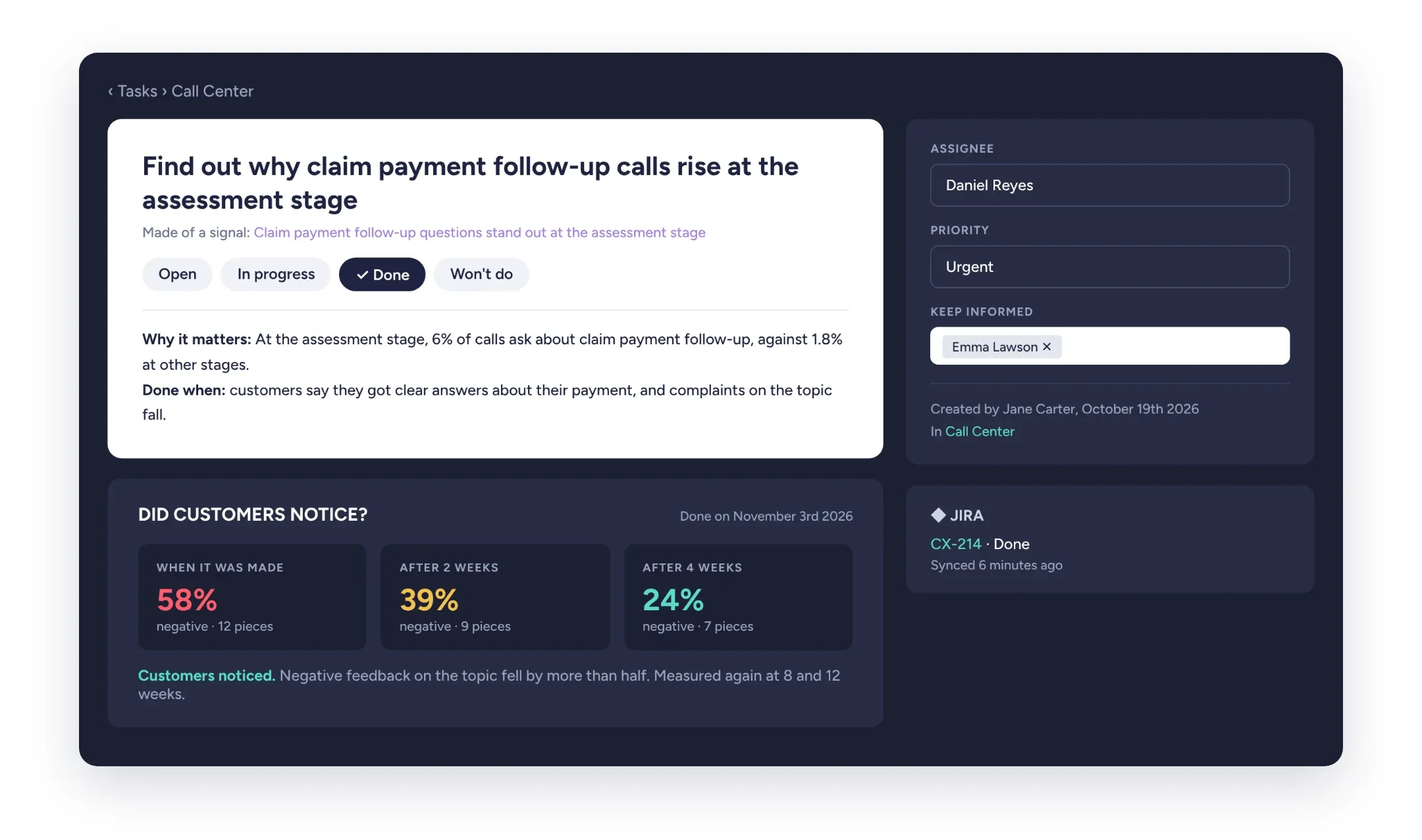
Two and four weeks after a Task is done, Kimola reads the same feedback again and compares the weeks before the Task with the weeks after it. It compares the finding's share of the feedback, not its count, so a busy month doesn't make a problem look bigger and a quiet one doesn't make it look solved.
The answer is Customers noticed, No change or It got worse. While an improvement holds, Kimola checks again at eight and twelve weeks, and if the problem comes back, the Task says so and offers to open it again.
The Work Stays in Jira
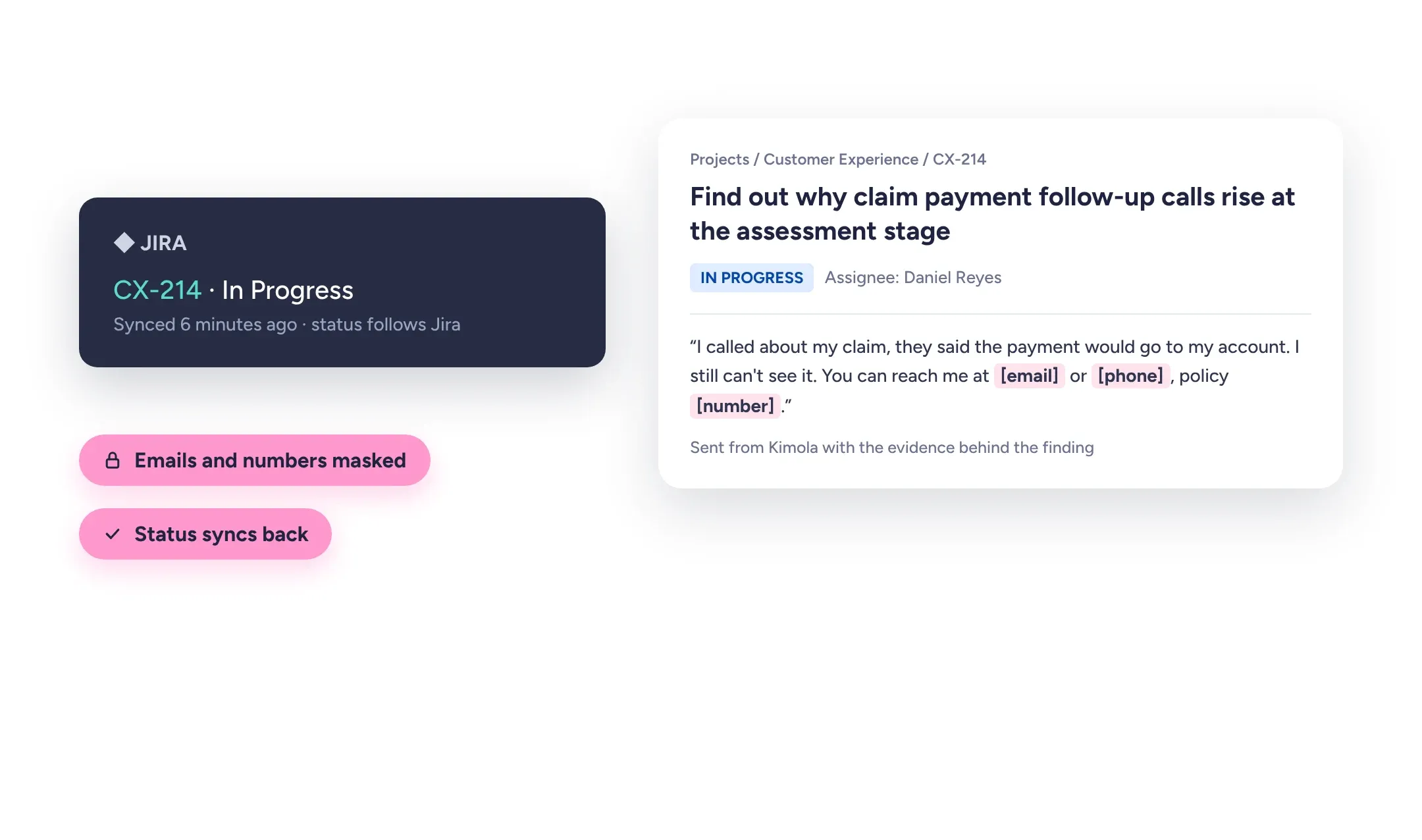
Kimola is not another task tracker. Send a Task to Jira as a new issue, or link it to one your team already has, and its status, assignee and due date follow the issue. When the issue is marked done in Jira, Kimola starts measuring.
The issue carries the finding, its numbers and a few pieces of feedback, with emails and numbers masked, so customers' personal details don't leave Kimola. The engineer who opens it knows why it matters without signing in.
Who Is on What
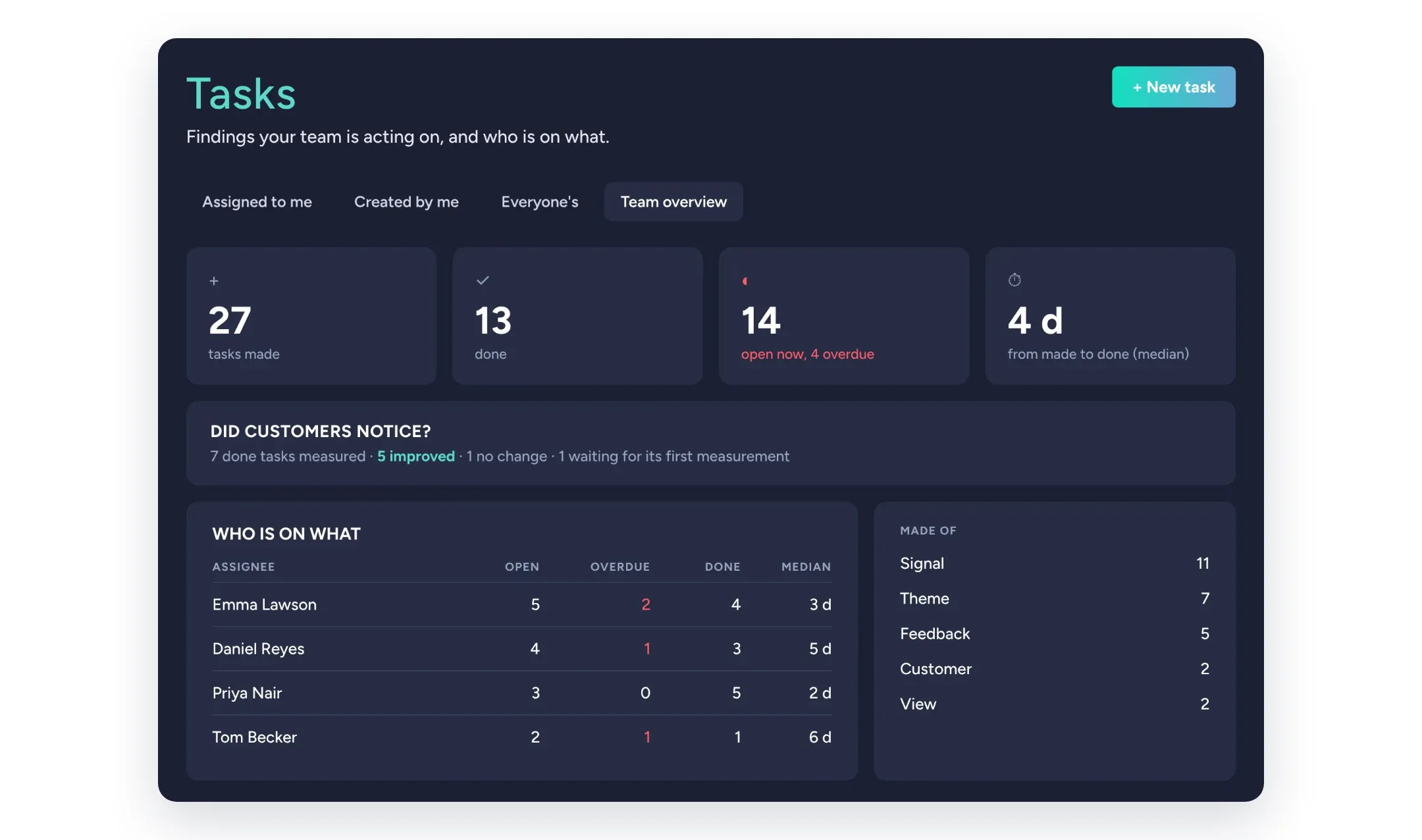
The Team overview adds every Task up for the period you choose: how many were made and done, how many are open or overdue, the typical days from made to done, and how many of the finished Tasks customers noticed. A team lead reads whether the work on customer feedback reaches customers, and where it piles up, on one page.
Kimola emails the people on a Task when it changes and sends a digest every Monday. Tasks are part of the Enterprise package and Kimola On-Premises.
Bring the feedback you already have.
Organize feedback like a research team.
See the people behind the feedback.
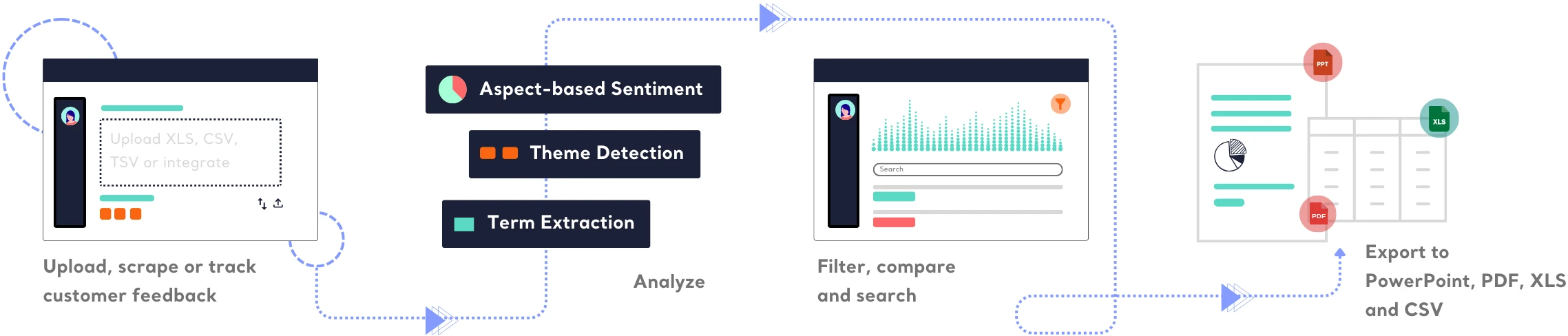
See how teams turn different kinds of feedback into research.






Frequently Asked Questions
About Tasks
-
Is Kimola a task tracker?
No. The work happens where your team already plans it, for example in Jira. A Task keeps the reason for the work and its evidence, and the loop closes in Kimola, when the same feedback is read again after the work is done.
-
How does Kimola know whether a Task worked?
It compares the finding's share of the feedback and its NPS in the weeks before the Task was made with the weeks after it was done. A lower share or a higher NPS is the improvement the Task was made for. The first answer comes after two weeks, the main result after four.
-
Can every Task be measured?
Only Tasks with feedback behind them. A Task written in your own words has nothing to read again, and neither does a Task closed as Won't do, because the work wasn't done. When there is too little feedback in the weeks compared, the Task says so instead of guessing.
-
What does a Jira issue created by Kimola contain?
The finding, its numbers and a few pieces of feedback in customers' own words, along with the Task's priority, assignee and due date. Emails and numbers in the feedback are masked in the issue.
-
Can I make a Task from a Report?
No. Tasks are made from Spaces, Customers and Departments, because measuring a Task needs feedback that keeps arriving after the work is done. A Report is one dataset, analyzed once.
-
How do Tasks relate to Signals and Action Plans?
Both are common starting points. A Signal becomes a Task with its numbers kept as evidence, and so does any action of an Action Plan. An action's Task can be measured when its evidence names a Signal of the Space.
Turn customer feedback into structured market research in 30+ languages—no AI training needed.
Create a Free Account No credit card · No commitment