Why Do Most Baby Swings Fail the "Hands-Free" Promise?
Oct 11, 2026 - 5 minute read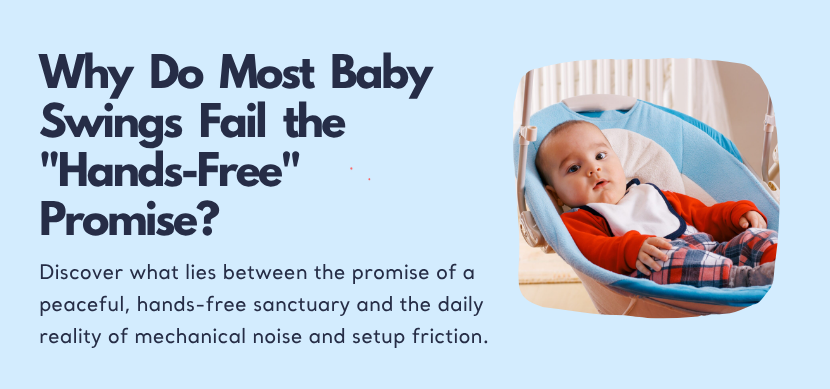
Baby swings promise a rare commodity for new parents: time. They expect a safe, soothing sanctuary where their baby can relax, allowing them to finally drink a hot cup of coffee or finish a chore.
In reality, for many families, the experience is defined by mechanical noise, assembly headaches, and the unpredictable temperament of the baby. The gap between the dream of a peaceful, hands-free afternoon and the reality of a loud, space-consuming machine is not random; it follows a pattern of technical friction and misaligned expectations.
What Customers Actually Experience
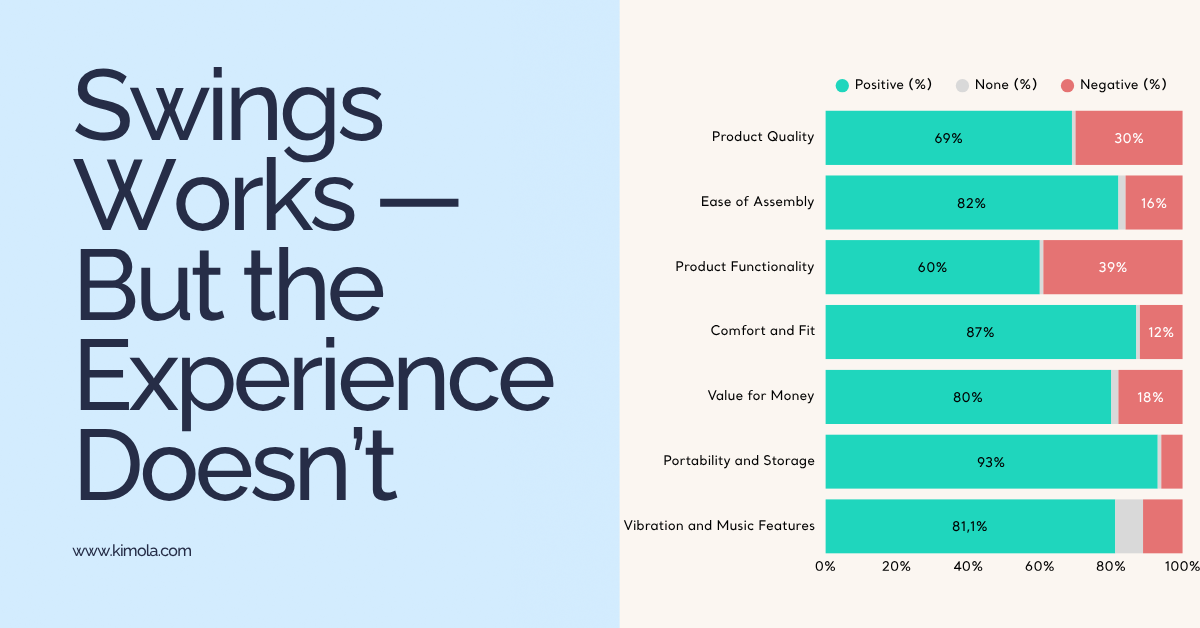
Based on more than 2,000 user reviews and community discussions gathered from various platforms, several consistent patterns emerge regarding the baby swing category.

The Mechanical Calm vs. Distracting Noise
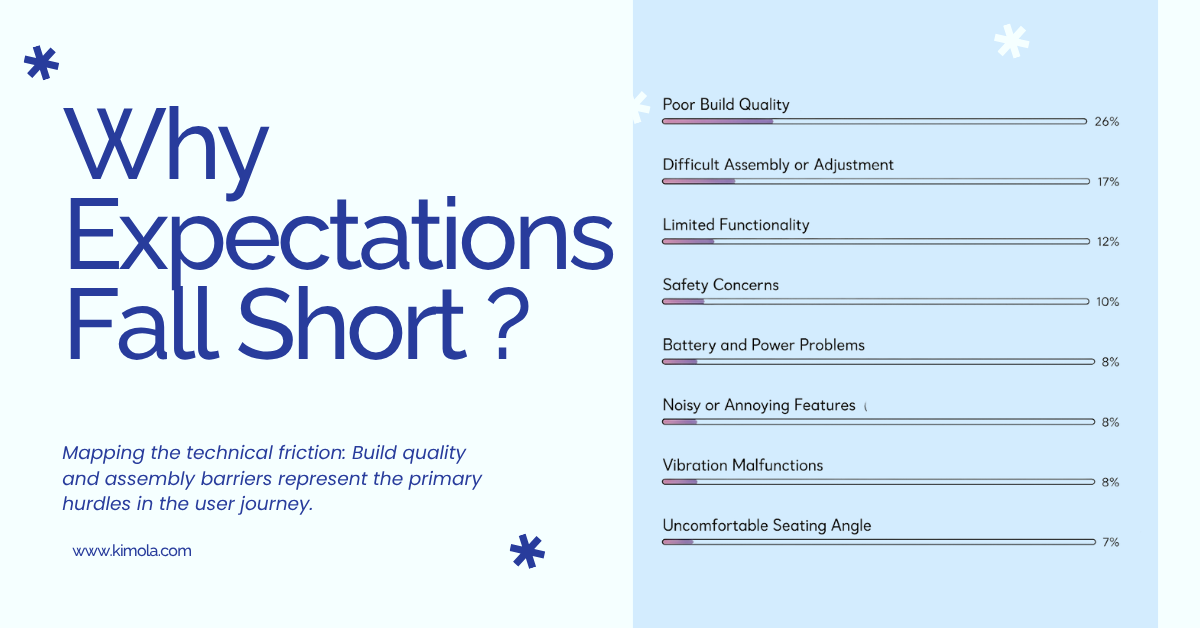
A significant pattern in consumer feedback highlights that "Product Quality" is often overshadowed by mechanical flaws. While the swing is meant to soothe, many users report that a "loud clicking noise" or "motor grinding" actually keeps the baby awake or irritates the parents. This creates a contradiction where the device intended to create peace becomes a source of environmental stress.
The Assembly Obstacle Course
Experience patterns show a high density of frustration surrounding "Ease of Assembly" and "Instruction Clarity". Parents—often sleep-deprived—expect an intuitive setup, but instead encounter "missing screws," "confusing diagrams," and "poorly labeled parts". If the product requires a tool-heavy, two-hour setup, the initial positive sentiment drops before the swing is even turned on.
The Movement Mismatch: Too Fast or Too Slow?
There is a recurring pattern of "Speed and Movement Settings" being a point of contention. What one baby finds soothing, another finds jarring. Users frequently mention that "even the lowest setting is too fast," causing safety concerns, or that the "swinging motion is too subtle" to actually calm a fussy infant. This highlights that the category's primary function is highly subjective and difficult to standardize.
Baby Swing Users — Different Expectations, Different Outcomes
Analyzing thousands of consumer voices reveals that not every parent approaches this category with the same needs. Here are the four distinct personas defining the market today:
The Desperate Sleeper: This user is looking for one thing: a nap for their baby. They prioritize "Soothing Features" like white noise and gentle vibration. They get frustrated most by "Mechanical Noise" that disrupts the very sleep they are trying to facilitate.
The Safety First Parent: For this group, "Product Safety" and "Sturdiness" are non-negotiable. They scrutinize the harness, the base's stability, and the "Speed Settings". If a swing feels too fast or looks flimsy, they will return it immediately, regardless of how much the baby likes it.
The Minimalist Urbanite: These users focus on "Space Saving" and "Ease of Storage". They are often frustrated by the large footprint of traditional swings and look for "Portable" or "Foldable" designs that don't take over their entire living room.
The Tech-Savvy Multi-Tasker: This user values "Ease of Use" and modern features like Bluetooth connectivity or remote controls. They want to control the swing from across the room and are the most vocal about "Defective Electronics" or poor battery life.
What Winning Baby Swing Brands Do Differently
The Silence of Success: Moving Beyond Mechanical Noise
While a baby swing is technically defined by its movement, its primary functional value is actually silence. Analyzing consumer feedback reveals that mechanical noise—specifically clicking or grinding sounds—is the ultimate dealbreaker for parents. Even a perfectly engineered swinging motion becomes redundant if the motor’s sound prevents the baby from drifting off, which directly correlates with high return rates and negative sentiment. Strategic brands in this space have recognized that they aren't just selling movement; they are selling an invisible mechanical experience. By prioritizing "Silent Motor Technology" as a core marketing pillar, winning brands ensure that the product’s operation never competes with the baby’s comfort, turning a functional machine into a trusted soothing sanctuary.
Winning the "First Hour": Simplifying the Assembly Journey
The long-term relationship between a brand and a parent is often decided in the very first hour—the assembly phase. Data suggests that confusing instructions and hardware discrepancies during setup create immediate "buyer's remorse" for already stressed, sleep-deprived parents. This initial friction sets a negative tone for the entire product lifecycle, regardless of how well the swing performs later. Successful brands mitigate this risk by investing in "Tool-Free Assembly" and interactive, video-based instructions. By intentionally reducing the cognitive load required to build the product, these brands align themselves with the parent's fundamental need for simplicity, building brand trust from the moment the box is opened.
Explore This in Your Own Market
Understanding a complex category like baby swings requires moving beyond individual complaints to see the broader patterns within thousands of voices. When we look at the data, it becomes clear that the friction usually lies in the gap between the promise of "peace" and the reality of "mechanical noise" and "setup stress".
This level of analysis turns raw feedback into a strategic roadmap. Identifying these patterns manually is a monumental task, but Kimola does it automatically, turning thousands of customer comments into actionable insights. Are you ready to see the real patterns in your category? Try Kimola to uncover what your customers are truly experiencing.