10 Tools for Creative Strategists: From Audience Insight to Ad Analytics
Oct 27, 2026 - 12 minute read
A creative strategist's work moves through a few steps, and each step has its own typical tools. To understand the audience, strategists analyze customer and competitor reviews in Kimola and ask questions directly with surveys in SurveyMonkey. To follow conversations and trends, they use Talkwalker for social listening and Glimpse for spotting rising topics in search data. To study ads and campaigns, they browse the Meta Ad Library and TikTok Creative Center, save and organize inspiration in Foreplay, and research award-level campaigns in Contagious IQ. Xmind helps structure ideas into angles and concepts, and Motion shows which creative elements drive performance once ads are live.
Few teams need all ten tools at once. Several of them are free or have a free starting point, so a strategist can begin with the free ad libraries and add paid tools as the volume of creative work grows.
This guide is written by the Kimola team. Kimola is our product, so we explain where it fits and where it doesn't, and we describe every other tool based on its public documentation.
What Does a Creative Strategist Do?
A creative strategist decides what an ad should say, to whom and in what form, and uses evidence to make that decision. The role is most common in performance marketing and social advertising, at brands and agencies, where teams produce a steady stream of ads and need to know which ideas lead to clicks and sales.
The work usually follows a loop. The strategist researches the audience and the category, studies what competitors are running, and turns what they learn into angles, hooks and creative briefs. Once ads are live, they look at which concepts and elements performed, and that becomes the starting point for the next round. Good creative strategy connects the two ends of that loop: real customer motivations at the start and real performance data at the end.
How We Chose These Tools
We included a tool only if it is a primary tool for at least one step of that loop: audience research, conversations and trends, ad and campaign research, ideation, or creative performance. For each tool, we looked at what it does at that step, whether it can be evaluated on a free plan or trial, and whether its pricing is published. Pricing for each tool comes from its own pricing page.
We left out general productivity tools such as note-taking apps and project management platforms. Creative teams use them every day, but they are not specific to creative strategy, and most teams already have their own.
Understanding the Audience
Kimola
Kimola is an AI platform that turns customer feedback into enterprise-grade market research. Teams analyze the feedback they already have, such as survey responses, support tickets, call transcripts and social conversations, or collect public reviews by pasting a link to a product page on Amazon, Trustpilot, Google Play, the App Store and other platforms. For creative strategists, Kimola is a way to do review mining at scale: reading what customers and competitors' customers say in their own words, and finding the motivations and frustrations that can become ad angles.
Collecting your own and competitors' reviews. In Kimola, public reviews can be collected by pasting a link to a product, business or app page, and a browser extension collects feedback from more than 30 other sources, including Reddit and YouTube. The same method works for a competitor's product page, so a strategist can see what a rival's customers praise and complain about and compare it with their own brand's reviews. Feedback written in more than 30 languages is analyzed together, which helps teams that run campaigns in several markets.
Finding the "why" behind the reviews. Kimola finds themes in the data itself, without predefined labels, and gives every theme mentioned in a review its own sentiment. It then asks every comment research questions called Dimensions: Motivations (why people choose the product), Pain Points (what goes wrong), Unmet Needs (what they wish were different) and Personas (who is speaking). For a skincare product, for example, a motivation around sensitive skin and a pain point about a sticky feel are two different findings, and each can lead to a different ad angle written in the language customers actually use.
Seeing what is different, not only what is loud. Kimola tests combinations of themes, Dimensions, segments and time periods, and only statistically significant differences and trends become Signals. If buyers of one product variant, or reviewers in one country, mention a motivation far more often than others, that appears as a Signal only when the gap is large enough to be real. Scores are deterministic, so the same data always produces the same ranking. They also account for volume: a theme with 5 reviews that are all positive does not outrank a theme with 50 reviews that are mostly positive, because 5 reviews say very little. For a strategist, this means the insight in a brief comes from the data rather than from a handful of memorable comments.
Kimola does not analyze ad creatives, measure ad performance or show competitors' ads, so it works alongside the ad libraries and creative analytics tools in this guide. It does not send surveys and is not built as a real-time social media or trend monitoring dashboard. If a product has only a few dozen reviews, reading them directly may be enough. The free Starter plan is limited to 150 queries per month.
Pricing: Kimola has a free Starter plan with no credit card required, and paid plans start at $49 per month. Usage is measured in queries, and the full plan details are on the pricing page. Enterprise plans are priced individually and include an account manager.
SurveyMonkey
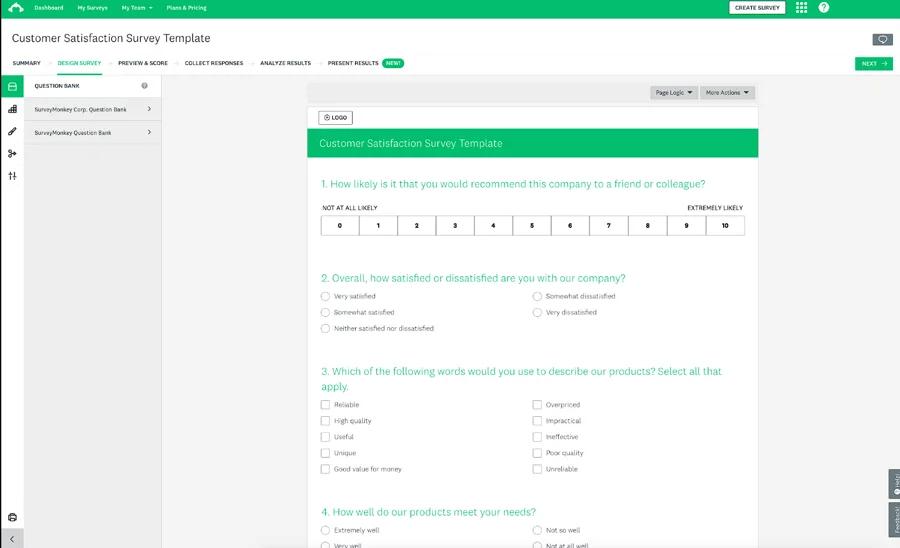
SurveyMonkey is an online survey platform for creating, sending and analyzing surveys. It offers templates, a wide range of question types, multilingual surveys and many ways to share a survey, from links and email to websites and social media. On team plans, open-ended answers can be summarized with AI analysis and grouped into themes.
For creative strategists, a survey answers questions that reviews cannot: why a customer chose the brand over another, which of several messages feels most convincing, or where a new customer first heard about the product. Post-purchase surveys are a common source of hooks and objections for the next round of ads. A survey shows how people answer the questions they are asked, so its value depends on how well those questions are written.
Pricing: SurveyMonkey has a free Basic plan with up to 10 questions per survey and a limited number of responses. Individual plans include Advantage at $39 per month ($468 billed annually) and Premier at $139 per month ($1,668 billed annually). Team plans start at $30 per user per month for Team Advantage, with a minimum of 3 users and annual billing.
Following Conversations and Trends
Talkwalker (Lumen by Talkwalker)
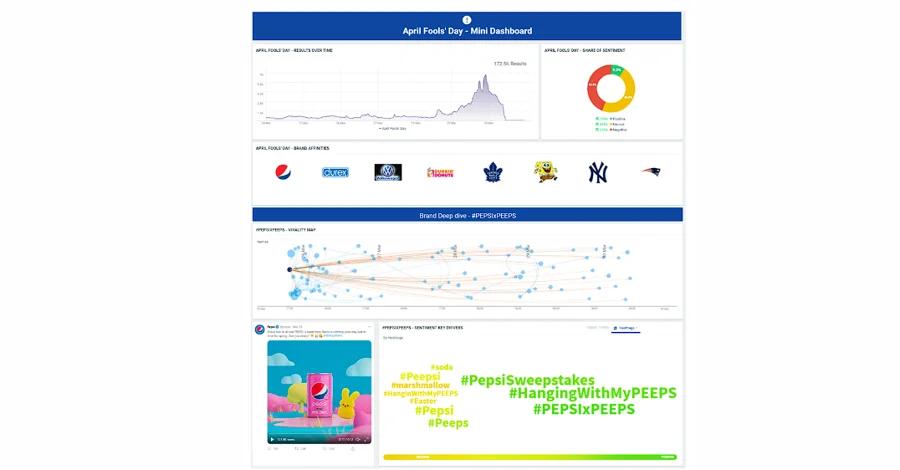
Talkwalker is a consumer intelligence platform for social listening, media monitoring, social benchmarking and audience insights. Hootsuite announced its acquisition of Talkwalker in April 2024, and the product is now called Lumen by Talkwalker. It tracks conversations across social networks, news, blogs, forums and other online sources, analyzes sentiment, and detects brand mentions in images and video.
For creative strategists, Talkwalker shows how people talk about a brand, its competitors and a category as it happens. It is useful for spotting a conversation a campaign can join, checking how a launch is received, and comparing share of voice with competitors. Talkwalker is built for monitoring at organizational scale, so a single strategist or a small team may find it more platform than they need.
Pricing: Talkwalker offers Core, Analyze and Business plans. Pricing is not published and is available on request through a demo.
Glimpse
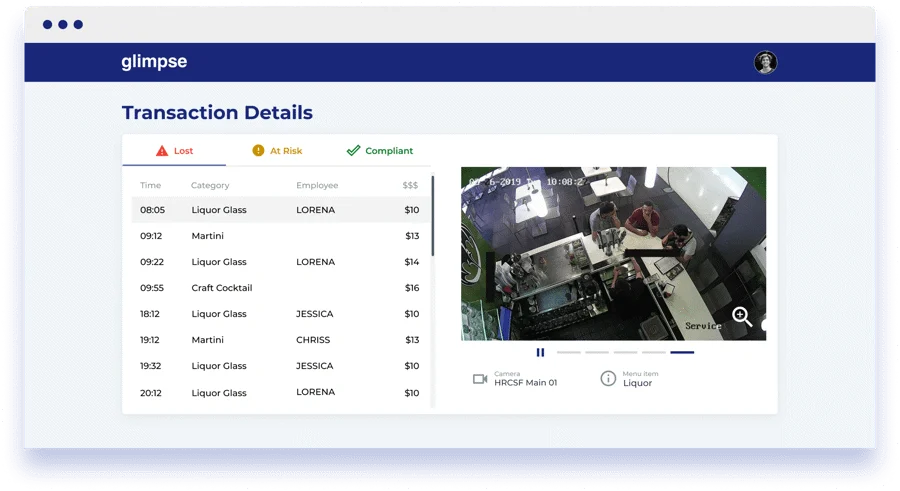
Glimpse is a trend discovery tool that uses search data to find fast-growing topics before they peak. For any keyword, it shows search volume and growth, a breakdown of the channels where the topic is discussed, such as TikTok, Reddit, Instagram and YouTube, and a forecast of where the trend is heading. A Chrome extension adds Glimpse data on top of Google Trends.
For creative strategists, Glimpse helps decide which themes, ingredients, aesthetics or product categories are worth building creative around, and which ones have already peaked. It works on search and trend data, so it shows that interest in a topic is growing but not why people are interested.
Pricing: Glimpse offers a free sign-up and a free browser extension. Pricing for paid and Enterprise plans is not published and is available on request.
Studying Ads and Campaigns
Meta Ad Library
Meta Ad Library is a free, searchable database of the ads currently running across Facebook, Instagram, Messenger, WhatsApp, Threads and Meta's Audience Network. Anyone can search by advertiser or keyword without logging in, and each ad shows its copy, creative, landing page and the platforms it runs on. Ads about social issues, elections and politics stay in the library for seven years.
For creative strategists, the Ad Library is the starting point of competitor research: which formats rivals use, which offers and hooks they repeat, and how long an ad has been running, which often hints at whether it works. The library shows what is running, not how well it performs, and ads other than social issue and political ads disappear once they stop running, so strategists who want to keep examples need to save them elsewhere.
Pricing: Meta Ad Library is free.
TikTok Creative Center
TikTok Creative Center is TikTok's free, public hub of creative resources. Its Top Ads section collects high-performing ads from the platform with performance details for each one, and its Trends section shows trending hashtags and other inspiration such as keywords. It also includes Symphony, TikTok's set of AI tools for generating and adapting video content.
For creative strategists working on TikTok, Creative Center shows what successful ads on the platform look like and which topics are rising, in TikTok's own data. Logging in is not required, although TikTok recommends it to see all features. It covers only TikTok, so strategists working across platforms combine it with other ad libraries.
Pricing: TikTok Creative Center is free.
Foreplay
Foreplay is an ad inspiration and creative workflow platform. Its Swipe File saves ads from the Meta, TikTok and LinkedIn ad libraries, Discovery searches a database of more than 200 million ads, Spyder tracks competitors' ads, Briefs turns saved inspiration into shareable ad briefs, and Lens adds creative analytics for a team's own Meta and TikTok ads.
For creative strategists, Foreplay solves a practical problem: ads in public libraries disappear when they stop running, and screenshots scattered across folders are hard to share. Foreplay keeps examples in one organized place and connects them to the briefs a team writes. Its focus is social ads, so research into broader brand campaigns or TV advertising needs a different source.
Pricing: Basic costs $59 per month ($49 per month billed annually), Workflow costs $175 per month ($149 per month billed annually), and Agency costs $459 per month ($389 per month billed annually). Enterprise pricing is custom. Every paid plan has a 7-day free trial that requires a credit card, and there is no free plan.
Contagious IQ
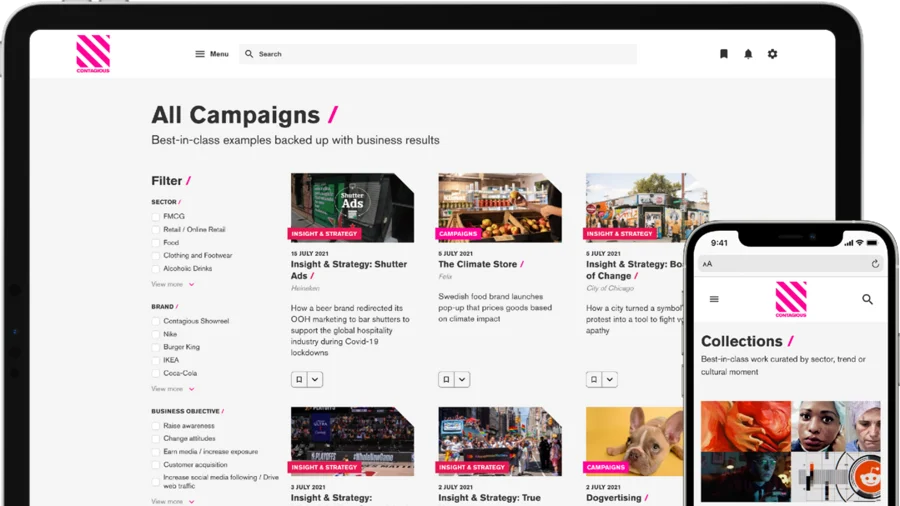
Contagious IQ is an intelligence platform from Contagious that analyzes creative and effective marketing work from around the world. It includes a database of thousands of campaigns, brand case studies, trend and category analysis, interviews with marketers and strategists, and AI-powered search across the archive.
For creative strategists, Contagious IQ is a source of strategic thinking rather than ad examples: why a campaign worked, which insight it was built on and how a brand approached a category problem. It is especially useful for pitches, big campaign briefs and building a point of view on a category. Its focus is on major brand and agency work, so day-to-day social ad research is better served by ad libraries such as the Meta Ad Library and TikTok Creative Center.
Pricing: Contagious IQ is available through a Contagious membership. Pricing is not published and is available on request.
Organizing Ideas
Xmind
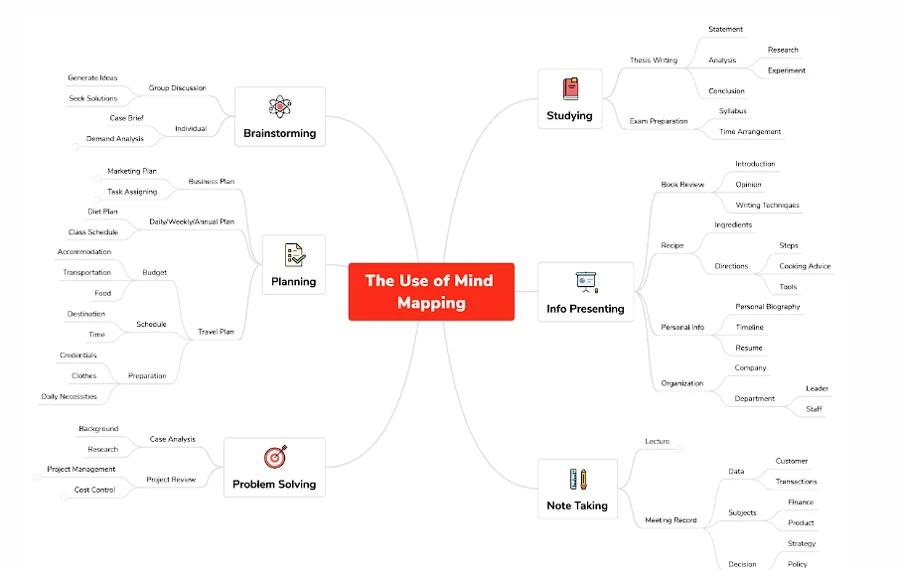
Xmind is a mind mapping tool for brainstorming and organizing ideas. It offers several map structures and themes, real-time collaboration on paid plans, AI features that turn text into a map, and a Pitch mode that turns a map into a presentation. It runs on Windows, macOS, Linux, iOS, Android and the web.
For creative strategists, a mind map is a fast way to move from one insight to many ideas: a central customer motivation branches into angles, each angle into hooks, and each hook into formats to test. That structure makes it easier to see which ideas have been explored and which have not. Xmind is a general thinking tool, so it does not provide research or data of its own; the inputs come from the other tools in this guide.
Pricing: Xmind has a free plan with up to 10 online maps and a limited number of AI credits. Paid Pro and Premium plans are listed on Xmind's pricing page, with a discount for yearly billing.
Measuring Creative Performance
Motion
Motion is an AI-powered creative analytics platform for advertisers. It connects to ad accounts on Meta, TikTok, YouTube and LinkedIn, shows performance in visual reports built around the creatives themselves, and uses AI to tag and analyze the creatives, so teams can see which creative choices drive results. Reports, alerts and benchmarks keep the whole team looking at the same data.
For creative strategists, Motion closes the loop: it shows which concepts and elements worked, which turns the next brief into a decision based on evidence. Its pricing is tied to ad spend and aimed at brands that spend steadily on paid social, so teams with smaller budgets may get enough from the reporting in the ad platforms themselves or from a lighter analytics feature such as Foreplay's Lens.
Pricing: The Starter plan costs $999 per month for brands spending up to $50,000 per month on ads. Pro and Growth plans for higher ad spend are priced on request. Motion offers a free trial with no credit card required.
How to Build Your Creative Strategy Toolkit
Most creative strategists start with the free tools. The Meta Ad Library and TikTok Creative Center show what competitors and top advertisers are running, and Glimpse's free tier shows which topics are rising. Together they cover a large part of daily competitor and trend research at no cost.
If you collect inspiration every day and need to share it with a team, Foreplay keeps saved ads organized and turns them into briefs. If you are building a larger campaign or a pitch and want to understand why great campaigns worked, Contagious IQ provides that strategic depth. If you want to follow how people talk about a brand or category as it happens, Talkwalker is built for social listening at scale. Xmind helps structure what you learn into angles and concepts.
Once ads are live, Motion shows which creative elements drive performance for teams with a steady paid social budget, while Foreplay's Lens or the ad platforms' own reports may be enough for smaller budgets. To hear directly from customers, SurveyMonkey lets you ask the questions you need answered.
If you want to know why customers buy, what frustrates them and how your competitors' customers feel, from hundreds or thousands of reviews and comments, Kimola is built for that. If a product has only a few dozen reviews, reading them carefully may be all you need.
Frequently Asked Questions
What tools do creative strategists use?
Creative strategists typically combine audience research tools, social listening and trend tools, ad libraries, an ideation tool and a creative analytics platform. A common setup is the Meta Ad Library and TikTok Creative Center for ad research, a swipe file tool such as Foreplay, a trend tool such as Glimpse, and a creative analytics tool such as Motion, with review analysis and surveys for audience insight.
How do creative strategists use customer reviews?
Reviews show why people buy a product and what disappoints them, in the words they actually use. Creative strategists read their own and competitors' reviews to find motivations, objections and phrases that can become ad angles and hooks. With large volumes of reviews, a tool like Kimola groups them into themes and Dimensions such as Motivations and Pain Points, so the strongest patterns are easy to see.
Are there free tools for creative strategy?
Yes. The Meta Ad Library and TikTok Creative Center are free, and Glimpse, Xmind and SurveyMonkey have free plans. Motion offers a free trial, and Foreplay offers a 7-day trial. Kimola's Starter plan is free, includes 150 queries per month, and requires no credit card.
What is the difference between social listening and review analysis?
Social listening tools such as Talkwalker monitor what people say about a brand across social media and the web as it happens, which is useful for following conversations and reacting quickly. Review analysis focuses on detailed feedback from customers who have used a product, and explains why they feel the way they do. Many teams use both: listening to follow the conversation and review analysis to understand the reasons behind it.
Why not just use ChatGPT to analyze customer reviews?
Chat assistants are good at summarizing a small set of reviews. Classifying thousands of reviews consistently, testing whether differences between products, markets or segments are statistically significant, getting the same result from the same data every time, and showing the source of every figure require dedicated infrastructure. For a quick read of a few dozen reviews, a chat assistant can be enough; for insights that a campaign will be built on, a purpose-built tool is more reliable.
Conclusion
A creative strategy toolkit works best when each tool covers one step of the loop: understanding the audience, following conversations and trends, studying ads and campaigns, organizing ideas and learning from performance. Ad libraries and analytics show what works, and customer feedback explains why it works, which is often where the next strong angle comes from. If you want to see how Kimola handles your own reviews and feedback, you can start on the free Starter plan.