Why Most LED Face Masks Don’t Deliver Results You Can Trust
Apr 24, 2026 - 8 minute read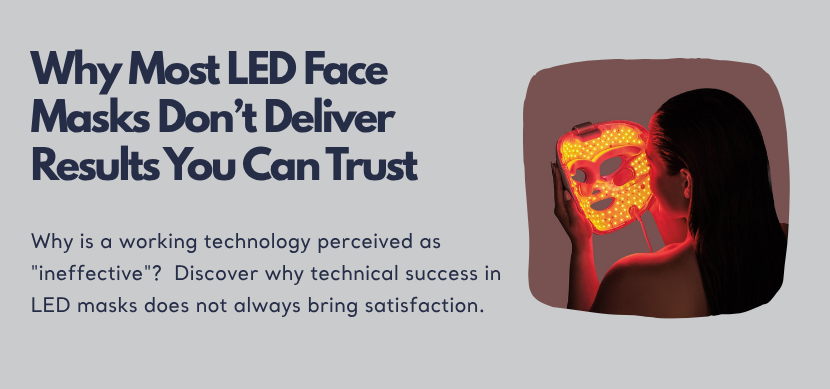
LED facial masks promise professional, non-invasive skin rejuvenation from the comfort of home. Users don't just purchase a technological device; they expect to buy a tangible biological change that fundamentally resolves chronic issues like acne, wrinkles, and blemishes.
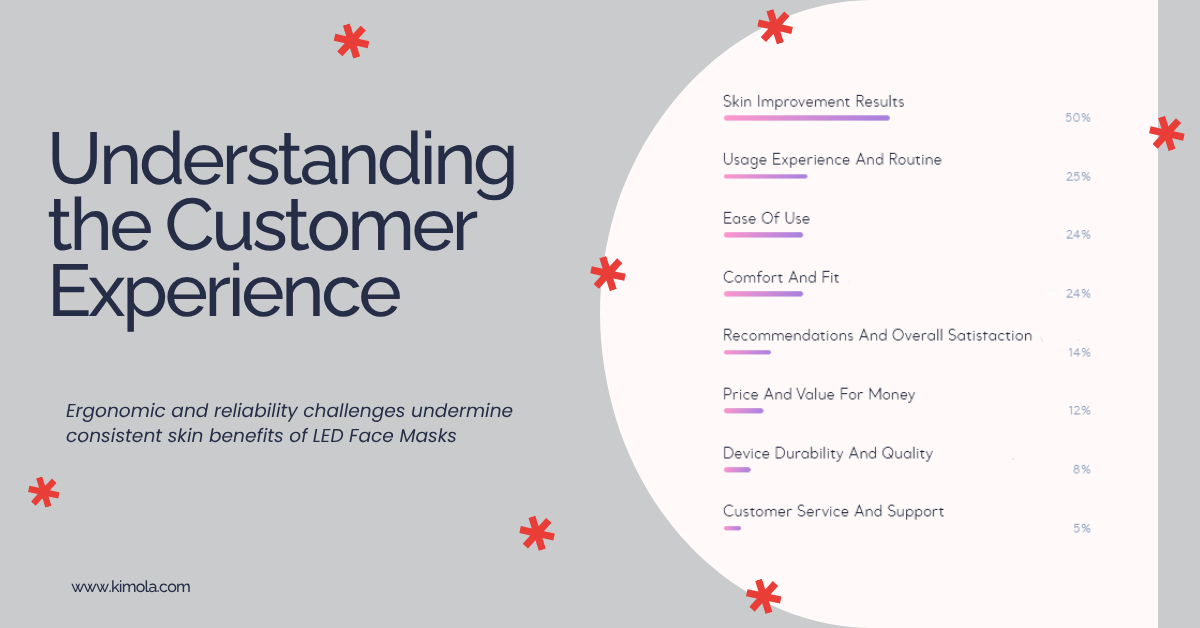
Based on more than 2,200 customer feedbacks collected from Walmart, BestBuy, Cult Beauty, CurrentBody, and Rosental platforms, this analysis reveals an experience fraught with physical discomfort and profound uncertainty, where the promise of "next-generation" technology collides with the harsh plastic ergonomics. Even if the lights are working, the months-long uncertainty regarding the physical pressure and effects exerted by the mask reinforces in the user the perception that the device is non-functional.
This gap between expectation and experience is not random; it follows a specific pattern. Although the technology may appear flawless on paper, the cumbersome physical presentation of the device and the opaque timing of results systematically erode the confidence even of the most enthusiastic users.
What Do Users Actually Experience?
Sensory Silence and the Evidence Gap
LED masks do not produce any significant physical feedback during use other than heat or a slight warmth. Users find it difficult to determine whether the device is actively intervening with the skin; this leads to intense doubt and a perception of ineffectiveness, especially during the "invisible" initial phases when results become apparent weeks or months later. The absence of a sensory feedback loop that instantly confirms the device's value entirely relegates user satisfaction to long-term biological outcomes, and any disruption or delay in this process instantly erodes trust in the technology.
Ergonomic Resistance: Advanced Technology vs. Traditional Ergonomics
Most existing designs consist of rigid materials with low flexibility that do not adequately account for different face shapes. Many users report severe pain at the bridge of the nose, pressure in the eye sockets, and the mask not staying securely in place, requiring them to hold it with their hands or lie motionless. The promise of "modernity" offered by LED technology is constantly at odds with the device's physical bulkiness and the discomfort it causes; when ergonomic comfort is not achieved, the user tends to prioritize technological benefits over convenience and abandon regular use of the device.
Hardware Vulnerability and Investment Fragility
These high-priced technological investments exhibit fundamental hardware flaws such as lack of a battery life indicator, malfunctioning cables, or rapidly deteriorating charging ports. Masks that suddenly stop working in the middle of a session or LEDs that cease to function after a few months of use cause the user to view the device as a "flimsy electronic item" rather than a "professional clinical tool." The positioning of a product as "clinical grade" is measured not only by its light quality but also by the durability of its hardware; Simple manufacturing defects become a trust barrier that undermines the technological legitimacy of the entire category.
Who are LED Face Mask Consumers?
Anti-Aging Focused (Aging Skin Concerned)
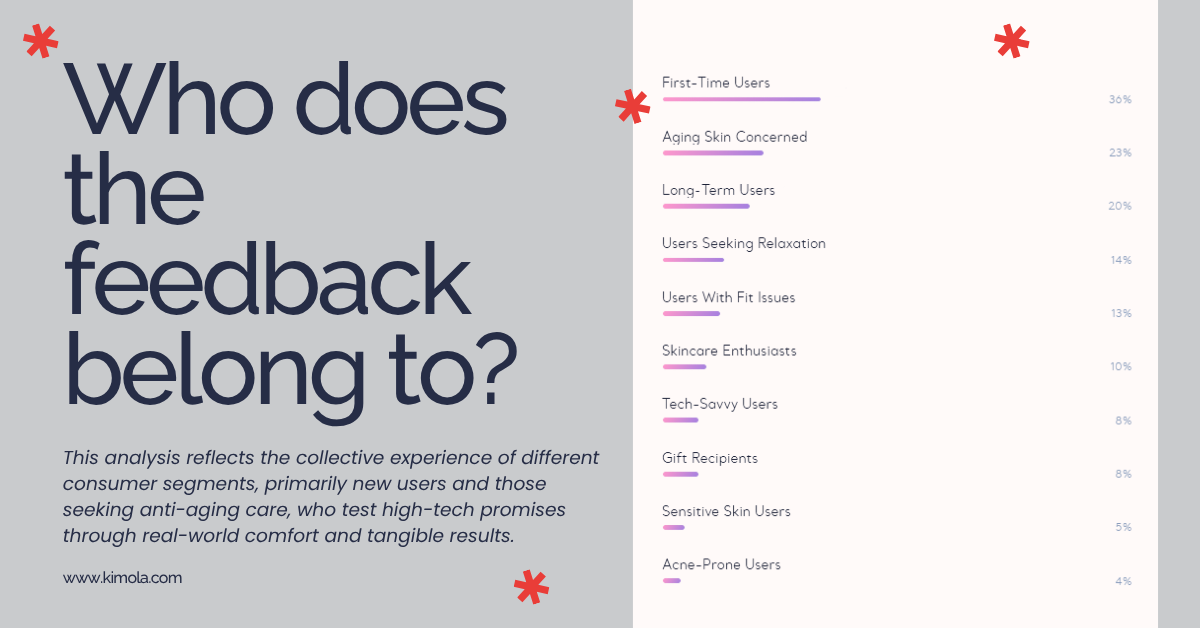
This segment consists of adults, typically between the ages of 40 and 60, who want to manage signs of aging such as fine lines, wrinkles, and loss of skin firmness. They integrate the device into their nighttime routine as a long-term strategy and use anti-aging serums alongside it. Their satisfaction depends on the gradual tightening and tissue healing achieved through consistent use over months; however, the slow onset of results and the device's heavy pressure on the face are the primary sources of dissatisfaction.
Acne and Sensitive Skin Owners (Acne-Prone & Sensitive Users)
This group aims to treat specific skin issues such as hormonal acne, redness, or rosacea using non-surgical methods. They actively use blue and red light modes to reduce inflammation and treat blemishes. Although satisfaction levels are high due to more tangible improvement symptoms, irritation at the points where the mask contacts the skin, a burning sensation, or spot flare-ups resulting from improper use create a rapid tendency to discontinue use in this group.
Tech-Savvy Users (Tech-Savvy Users)
They are conscious consumers who prioritize technical features such as the highest number of LEDs, wavelength diversity, and wireless operation when comparing professional clinical devices with home-use products. They incorporate the device into their routines by optimizing its technical capacity and application modes. This hardware-oriented group is the segment that exhibits the highest dissatisfaction in the face of quality control problems such as lack of battery life indicator, charging failures or poor wiring.
People Seeking Relaxation and Self-Care (Users Seeking Relaxation)
This is the group that views the LED mask not only as a beauty tool but also as part of their daily stress management and meditation routine. They typically use the device while lying down, accompanied by relaxing music or the massage feature, for the sense of relaxation they experience at the end of each session. When the ergonomic flaws of the device (excessive weight, nasal bridge discomfort) transform this "spa experience" expectation into a physical struggle for users, the product's technological promise loses its value for them.
Strategic Implications for the LED Mask Category
Managing Biological Lag and the Evidence Gap
The cellular healing process offered by LED technology is quiet and slow; since users do not receive any noticeable physical feedback during use, they find it difficult to verify whether the device is functioning properly. This situation pushes the user into a "gap of uncertainty" especially during the first four weeks, leading to the device being labeled as "ineffective" before the biological response period has fully begun. At this point, the difference between winning brands lies in their ability to manage expectations by educating users about the expected result timeline (8-12 weeks) instead of promising instant change. Successful strategies highlight post-treatment microsensory changes in the skin to legitimize the device's invisible effect and stabilize user confidence by encouraging objective progress tracking.
Protecting Technological Confidence through Hardware Durability
These high-priced technology investments create the perception of a "fragile gadget" among users due to simple hardware flaws such as lack of a battery life indicator or faulty wiring. No matter how advanced light technology may be, a simple battery malfunction or lack of contact instantly undermines the user's legitimacy in seeking professional treatment alternatives at home. Leading brands in the category act with the knowledge that technological reliability hinges on device uptime. Instead of adding complex features, they provide the user with long-term investment security by offering essential hardware elements such as clear charging status indicators and durable connection points as a "professional standard."
Transforming Ergonomic Limitations into an Experience Strategy
Current rigid designs transform the user's "self-care" motivation into a physical struggle due to nose bridge pain, orbital pressure, and inadequate strap systems. When ergonomic comfort is not achieved, the user prioritizes technological benefits secondary to this; because the physical discomfort caused by the device becomes a more dominant memory than the promised long-term skin improvement. Winning brands acknowledge the technical challenge of achieving perfect facial harmony and position their products as "a moment of peaceful respite" rather than a device for use "anytime, anywhere". Instead of fighting inadequate straps that force users to multitask while standing, they optimize the experience as a ritual that can be performed while lying down and provide proper positioning guidelines to manage ergonomic stress.
Closing the Safety and Communication Gap
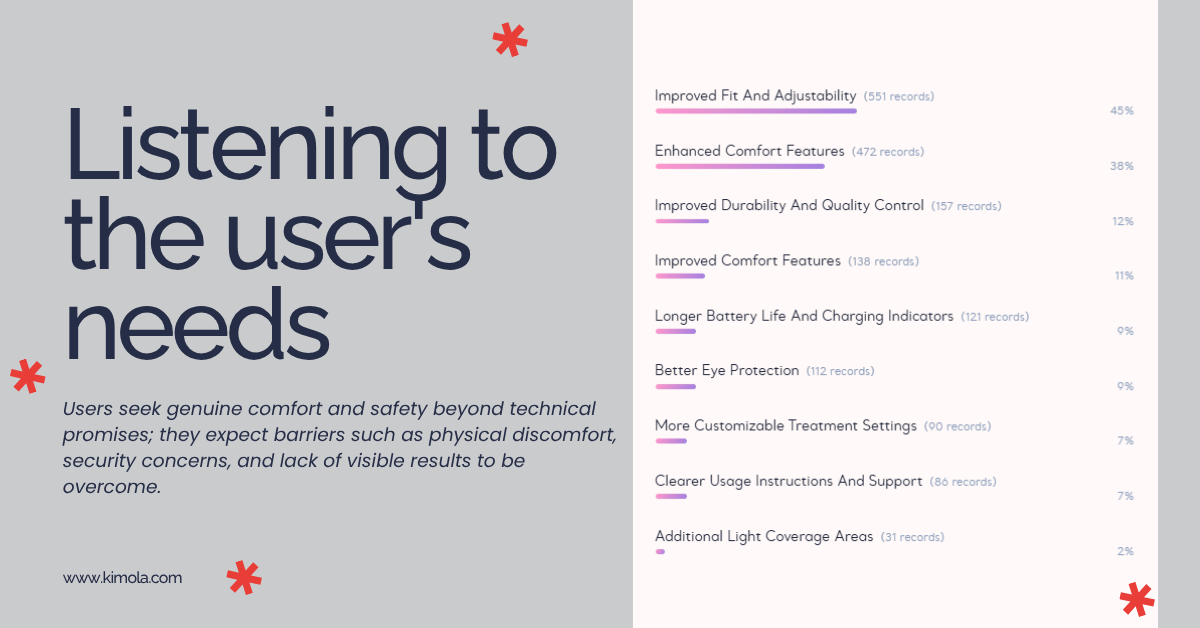
Users have serious safety concerns regarding the insufficient eye protection and potential harm caused by intense light exposure. The suspicion that regular use may damage eye health or trigger unexpected skin reactions (such as increased pigmentation) is the primary psychological barrier to continued use. Strong brands do not merely state their certifications; they transparently explain to users how to control light intensity, how to properly align eye protection, and which active ingredients they should avoid using with the device. Clear security communication and usage support directly increase the likelihood of achieving the product's promised results by enabling users to use the device without fear and at the correct frequency.
Customer feedback may seem like just a personal story when viewed individually, but when thousands of experiences are combined, Deconstructed patterns emerge that go beyond individual comments. Insights such as the "evidence gap" or "ergonomic resistance" we observe in the LED face mask category are actually evidence that thousands of users converge on a common language of experience. Being able to view these patterns in a scalable way is the only way to understand not only what the market buys, but how it integrates that product into its life.
Explore This in Your Own Market
This analytical approach is not limited to beauty technologies; every product category harbors unique user behavior patterns waiting to be discovered. Kimola offers a technology that automatically deciphers the complex connections within these vast data sets, transforming individual voices into strategic insights. You too can harness the power of Kimola to discover hidden consumer patterns in your category and develop data-driven strategies.