Why Do We Stop Using Lash Serums Just Before They Actually Work?
Oct 25, 2026 - 5 minute read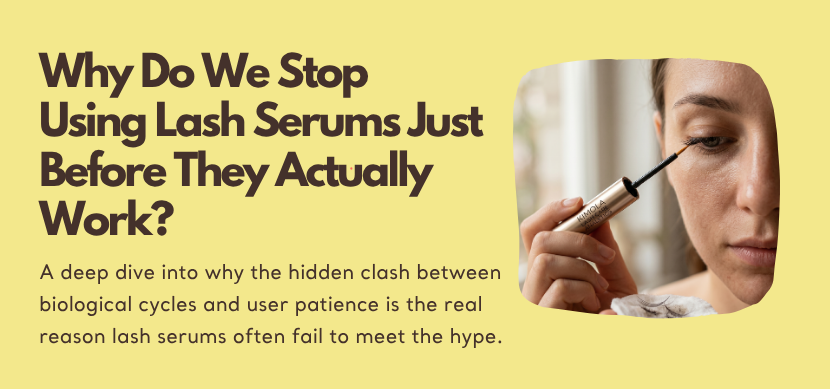
Lash growth serums promise a transformative gaze, leading customers to expect a dramatic, "falsies-free" lifestyle with long, voluminous natural lashes after just a few swipes.
In reality, for many users, this journey is a test of patience filled with inconsistent results and unexpected physical reactions. The gap between that dream of effortless beauty and the daily reality of the product's use isn't random; it follows a distinct pattern of friction between biological cycles and cosmetic expectations.
What Customers Actually Experience
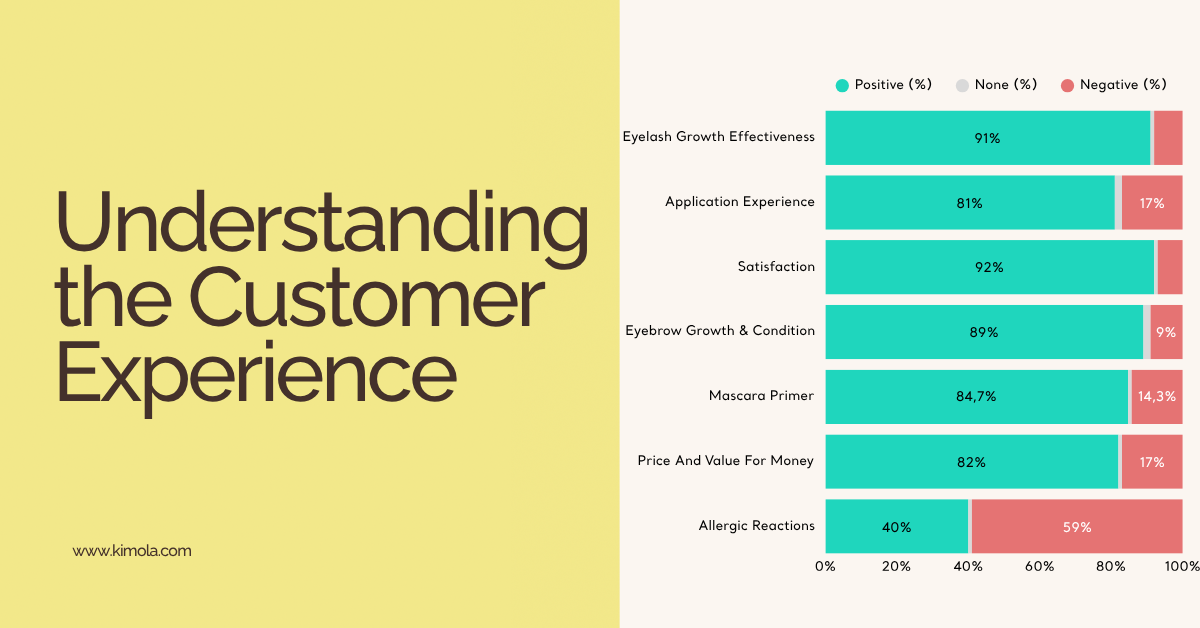
Based on more than 1,800 user comments collected from platforms such as Amazon, Walmart and Target, several consistent patterns emerge regarding the lash serum experience.
The Irritation Trade-off: When Effectiveness Costs Comfort
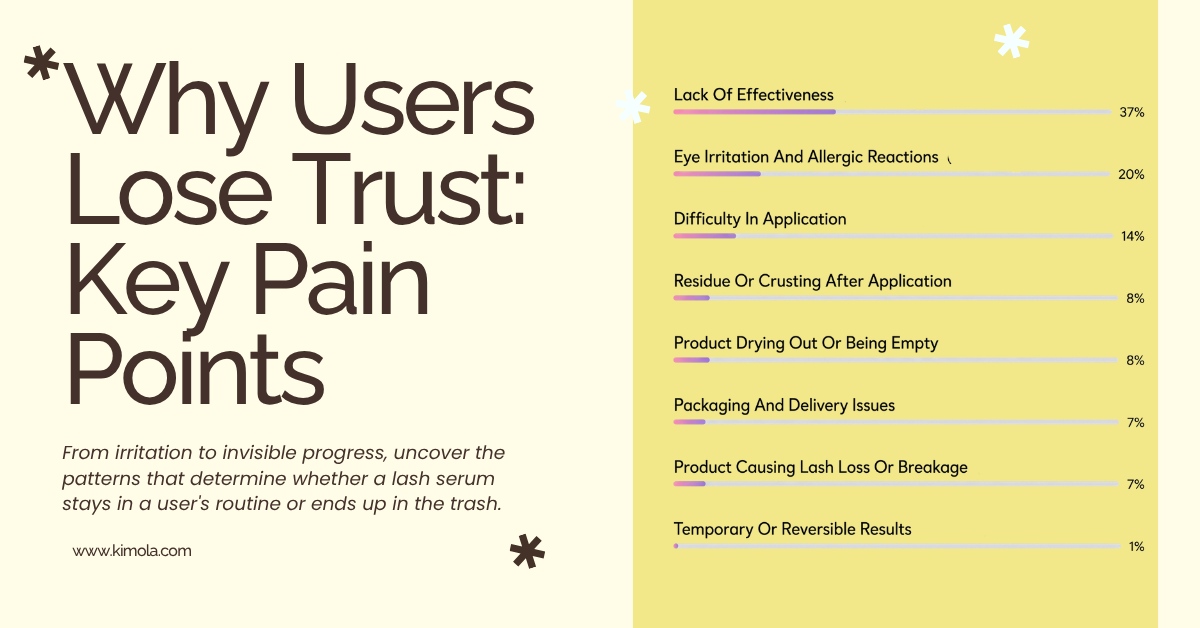
A significant pattern in the data shows that "Product Effectiveness" is frequently coupled with "Eye Irritation and Allergic Reactions". Users often report that the very serums that successfully trigger growth also cause redness, itching, or discomfort. This creates a "success but at what cost?" sentiment, where the behavioral pattern is not just about lash length, but about the health of the eye area itself.
The Biological vs. Cosmetic Timeline Gap
There is a high density of mentions regarding "week," "month," and "noticeable difference". Because these serums work through a biological growth cycle, users often perceive the product as "ineffective" simply because it doesn't match the immediate pace of a traditional cosmetic. If a visual "difference" isn't "noticed" within the first few weeks, satisfaction drops, even if the product is technically functioning as intended.
Functional Utility Beyond Growth
Interestingly, a positive pattern emerges around "Mascara Primer and Cosmetic Use" and "Eyebrow Condition". Users who find the serum doubles as a primer or improves brow health report much higher satisfaction. This suggests that for many, the serum is a multi-tool for the entire eye area rather than a single-purpose growth agent.
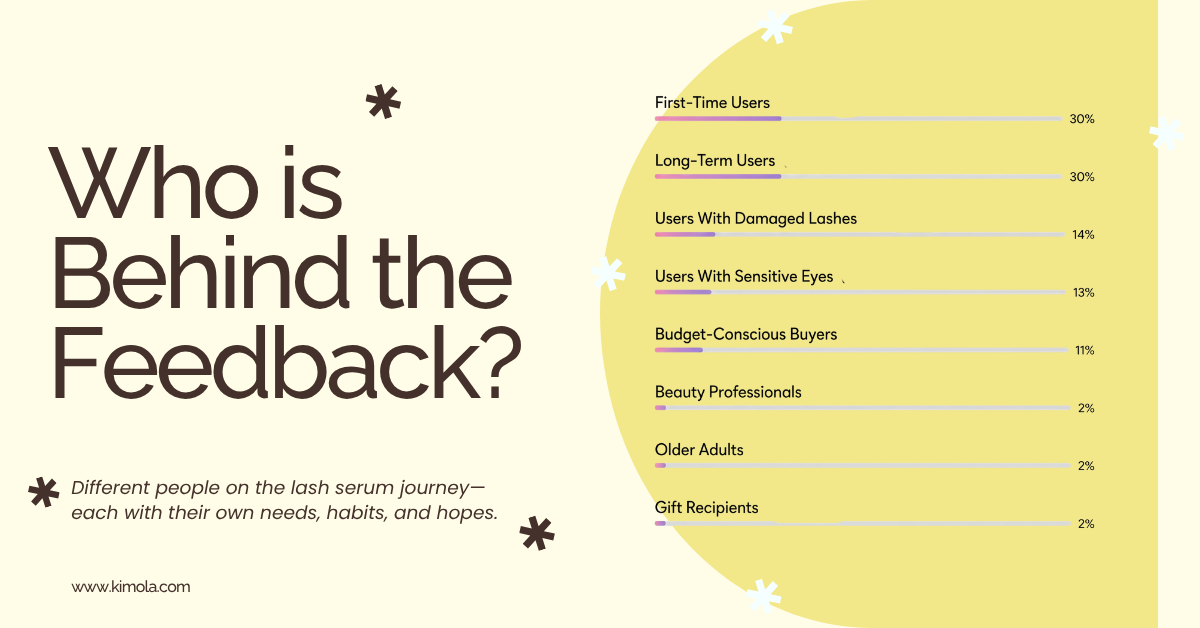
Who Are Lash Growth Serum Consumers?— Different Expectations, Different Outcomes
Analyzing thousands of consumer voices reveals that not every user approaches this category with the same goals. From those chasing dramatic visual proof to those prioritizing eye safety above all else, understanding these diverse motivations is key to decoding the lash serum journey. Here are the four distinct personas defining the market today:
The Results-Driven Perfectionist
This user has one primary metric: visible, dramatic length. They monitor their progress daily and expect a clear "difference" to appear on their own timeline. If the product doesn't deliver a "falsies" effect quickly, they are the first to label it a failure and switch brands. For them, the performance is purely binary—it either works visibly, or it doesn't.
The Sensitive Aestheticist
For this group, safety and comfort are non-negotiable and come before lash length. They are highly wary of "Eye Irritation" and specific ingredients like prostaglandins. A serum that provides growth but leaves the eyes red or itchy is considered a failed product. They prioritize the "Application Experience" and the health of the eye area above all else.
The Dual-Benefit Optimizer
These users don't just stop at their lashes; they use the serum for "Eyebrow Growth and Condition" as well. They are focused on "Price and Value for Money" and love products that simplify their routine. For them, a serum is a success if it acts as a versatile tool that improves the overall appearance of their eyes and brows simultaneously.
The Routine Builder
This user understands that growth takes "time" and "weeks". They treat the serum as a permanent fixture in their nightly ritual and value "Easy Application" and high-quality packaging. Since they are prepared for a long-term commitment, the physical experience of using the product every night is just as important as the eventual outcome.
What Winning Brands Do Differently
While many products work technically, user patience is often shorter than the biological growth cycle. Most consumers abandon their serum because they cannot visually track micro-progress during the early, "invisible" stages of growth. Winning brands don't just sell a formula; they manage the waiting period. They provide clear "milestone markers"—explaining what to look for at week 2 versus week 8—to prevent users from quitting prematurely.
Additionally, physical comfort is proving to be just as critical as final lash length. Data shows that "Eye Irritation" is the single biggest barrier to long-term customer retention. Successful strategies focus on a balanced formula—one that is powerful enough to show results but gentle enough for the daily "Eye Context." If a product causes discomfort, the consumer will eventually stop using it, no matter how long the lashes get.
Explore This in Your Own Market
Understanding a niche like lash serums requires moving beyond individual reviews to see the broader patterns within thousands of voices. When we look at the data, it becomes clear that the friction usually lies in the gap between user expectations and the reality of the daily routine.
This level of analysis turns raw feedback into a strategic roadmap. Identifying these patterns manually is a monumental task, but Kimola does it automatically, turning thousands of customer comments into actionable insights. Are you ready to see the real patterns in your category? Try Kimola to uncover what your customers are truly experiencing.